


Boycotting their own summit
Numerous EU heads of state and government, including German Chancellor Merz, chose at short notice to stay away from their own summit with the Latin American alliance CELAC – for fear of reprisals from the Trump administration.
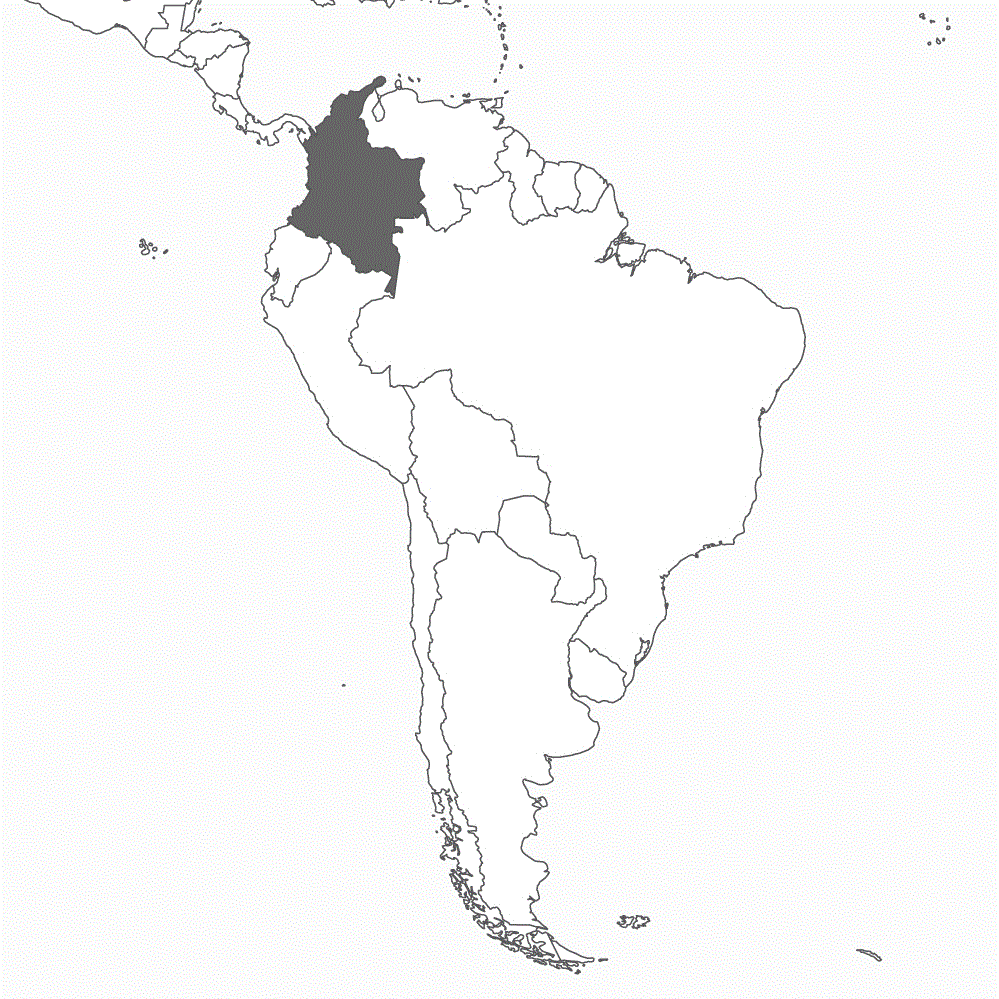
SANTA MARTA/BERLIN/WASHINGTON (own report) – In what is a huge affront to Latin American leaders, numerous EU heads of state and government, including Chancellor Friedrich Merz, torpedoed the summit arranged between the EU and the CELAC alliance on Sunday. The EU had previously attached great importance to the meeting as Europe seeks to regain some of its dwindling influence in the region and counter China’s growing presence. Statements made by the EU just a few days earlier praised “the strength and vitality of the partnership” with the subcontinent. Yet shortly before the summit Merz – along with French President Emmanuel Macron, European Commission President Ursula von der Leyen and other EU heads of state and government – cancelled their participation. The background to this decision is the US campaign of violence in the Caribbean. The Trump administration has repeatedly sunk boats and murdered dozens of people. When Colombian President Gustavo Petro, who has hosted the EU-CELAC summit, openly criticised extrajudicial killings, the United States slapped sanctions on him and Colombia. A number of senior EU officials and leaders of member states have chosen to boycott Petro and wreck their own summit. Driving this act of anticipatory obedience is the fear of reprisals from the Trump administration. Read more
Baerbock’s Lectures (II)
German Foreign Minister Baerbock’s first Latin American trip without success. No progress in quest for influence. Brazil deals Baerbock an open diplomatic rebuff.
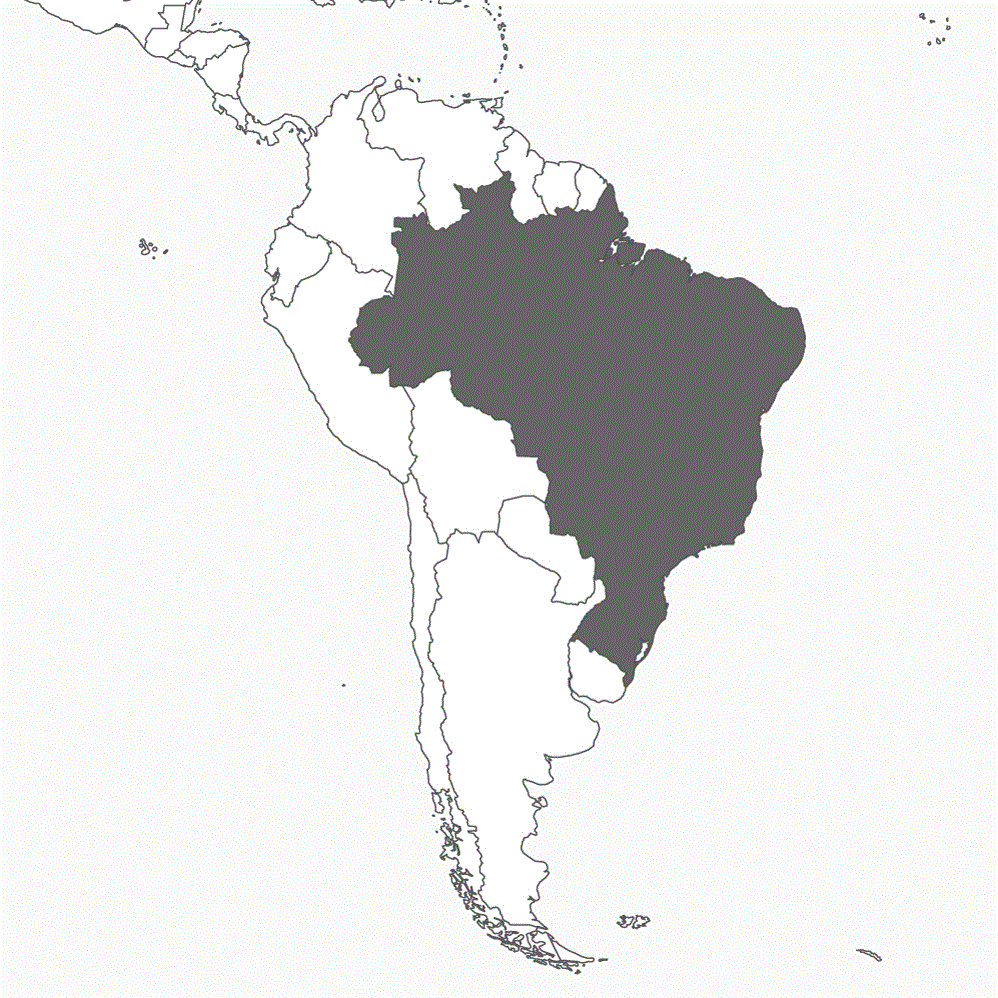
BERLIN/BRASÍLIA/BOGOTÁ/CIUDAD DE PANAMÁ (Own report) – German Foreign Minister Baerbock’s first Latin American trip ended last week in Brazil with a hefty rebuff and with no apparent success in Colombia or Panama. Talks on climate and energy policy had officially been the focus of her trip. Brazil should be motivated to protect its Amazon Forest. Colombia is earmarked as Germany’s future green hydrogen supplier, and Panama with its Canal as the hub for South American hydrogen exports. It is unknown, whether the foreign minister’s trip yielded concrete results. And it is also not clear what Baerbock had achieved in her quest to strengthen the West’s position in the USA’s fierce power struggle, ongoing since some time, against China’s growing influence in Panama. Her attempt to pressure Brazil’s President Luiz Inácio Lula da Silva and his government to choose sides against Russia in the Ukraine war, has utterly failed. Lula and his foreign minister granted Baerbock neither a meeting, nor a joint press conference with another member of the government. Read more
Après nous le déluge (III)
In enforcing the EU coal embargo against Russia, Germany has ramped up coal imports from Colombia – triggering protests from indigenous communities.
BERLIN/BOGOTÁ (Own report) – Germany's move to expand coal imports from Colombia to compensate for the loss of Russian coal under EU sanctions has sparked fresh protests around a notorious Colombian mine. The El Cerrejón mine and its operator Glencore have been sharply criticized for many years for human rights violations and severe environmental damage caused by mining practices in the region. German energy utilities are among the companies sourcing coal from El Cerrejón. Glencore was in fact considering closing the mine last year, but this is now off the table. The EU's embargo on Russian coal has driven up prices, which is why El Cerrejón is once again generating higher profits. Germany has also ramped up coal imports from Colombia. While the German government claims Glencore is now complying with human rights and environmental standards, local actors disagree. New protests, mainly by indigenous communities, against coal mining began in the region at the beginning of September. According to a representative of the indigenous Wayúu community, coal exploitation has only led to “contamination, environmental degradation and health problems”. Read more
BERLIN/BRASÍLIA/BOGOTÁ (Own report) - Under pretext of rallying "allies for human rights," Germany's Foreign Minister, Heiko Maas (SPD) will meet the two most right-wing presidents of South America. His interlocutor on Tuesday, Jair Messias Bolsonaro, is an avowed supporter of Brazil's military dictatorship. Already within the first month of his incumbency, police murders have drastically increased in his country. Columbia's President Iván Duque, whom Maas will meet thereafter, opposes the peace treaty with the FARC insurgents. Over the past two and a half years, more than 300 government opponents have been assassinated in that country - in most cases with impunity. While the foreign ministry is speaking of having a "foundation of shared values" with Bolsonaro and Duque, Berlin is actually seeking to rally allies in its struggle against China and Russia and to strengthen its position in Latin America vis-à-vis Washington. It is also striving to obtain access to sanctions-proof markets for Germany's export industry. Read more
GERMAN-FOREIGN-POLICY.com
Information on German Foreign Policy: News + Interviews + Analyses + Background