


Operational focus: North Atlantic
German Navy receives first US-built P-8A Poseidon maritime patrol and reconnaissance aircraft for use against Russian submarines. But warships and submarines for North Atlantic operations are Europe-made.
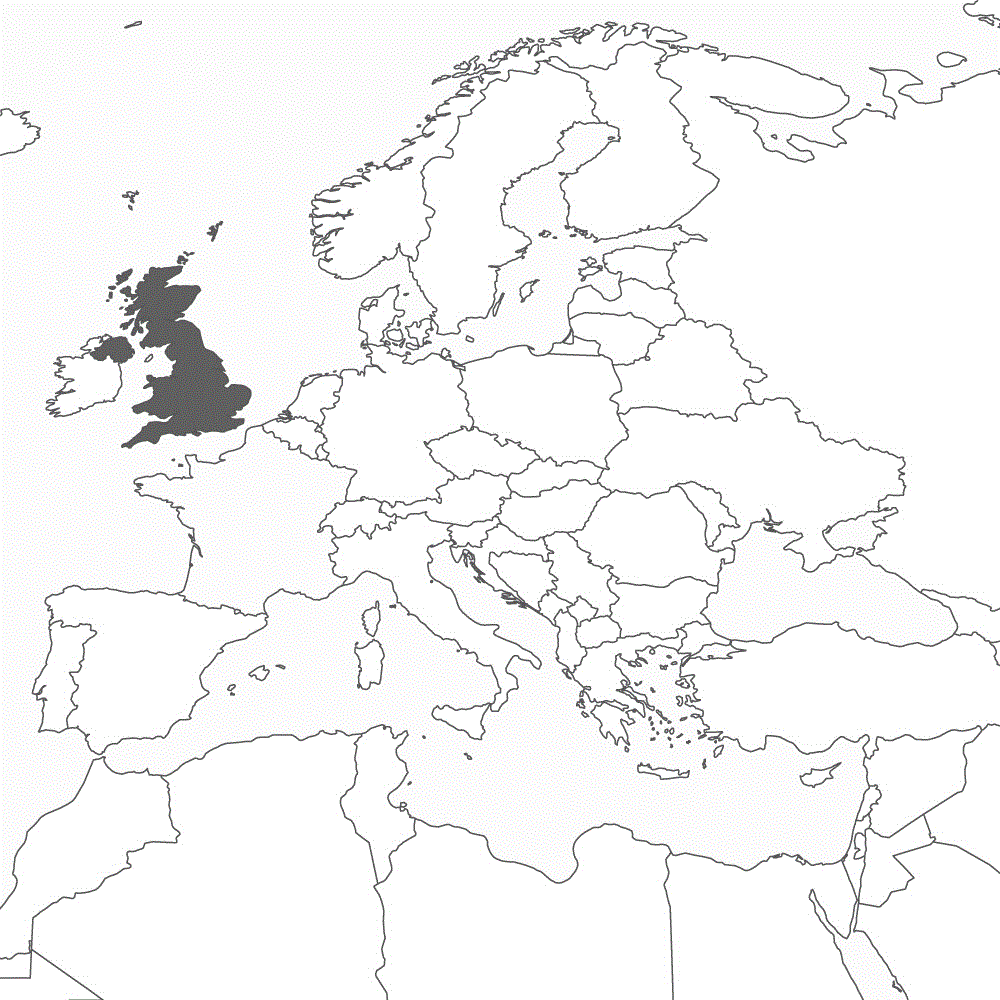
BERLIN/LONDON/OSLO (own report) – The German Navy has received the first of the five P-8A Poseidon maritime patrol aircraft ordered from the US. The tech-filled, Boeing-built aircraft is primarily designed for submarine hunting. It will be used to monitor movements in the Baltic Sea and, above all, in the North Atlantic, where it will be tasked with tracking down Russian submarines. North Atlantic operations are considered critical because all units of Russia’s Northern Fleet must cross this sea area to reach the Atlantic from bases on the Kola Peninsula. In a war scenario they could attack supply routes from North America to Europe. The German Navy’s P-8A Poseidon aircraft will be stationed at the British air base in Lossiemouth with its direct access to the North Atlantic. In ordering these aircraft, Germany has opted for a US product instead of the Franco-German MAWS maritime patrol aircraft as originally planned. Berlin’s decision marks a setback for the creation of an independent European defence industry. On the other hand, the submarines and warships to be deployed in the North Atlantic are being made in Europe. There is close cooperation between various defence companies from the United Kingdom, Norway and Germany. Read more
Countering Russia in the Far North
Conflict with Russia reaches far north. German Bundeswehr upgrades its capacities for operations in the Norwegian Sea to keep Russian warships out of the Atlantic.
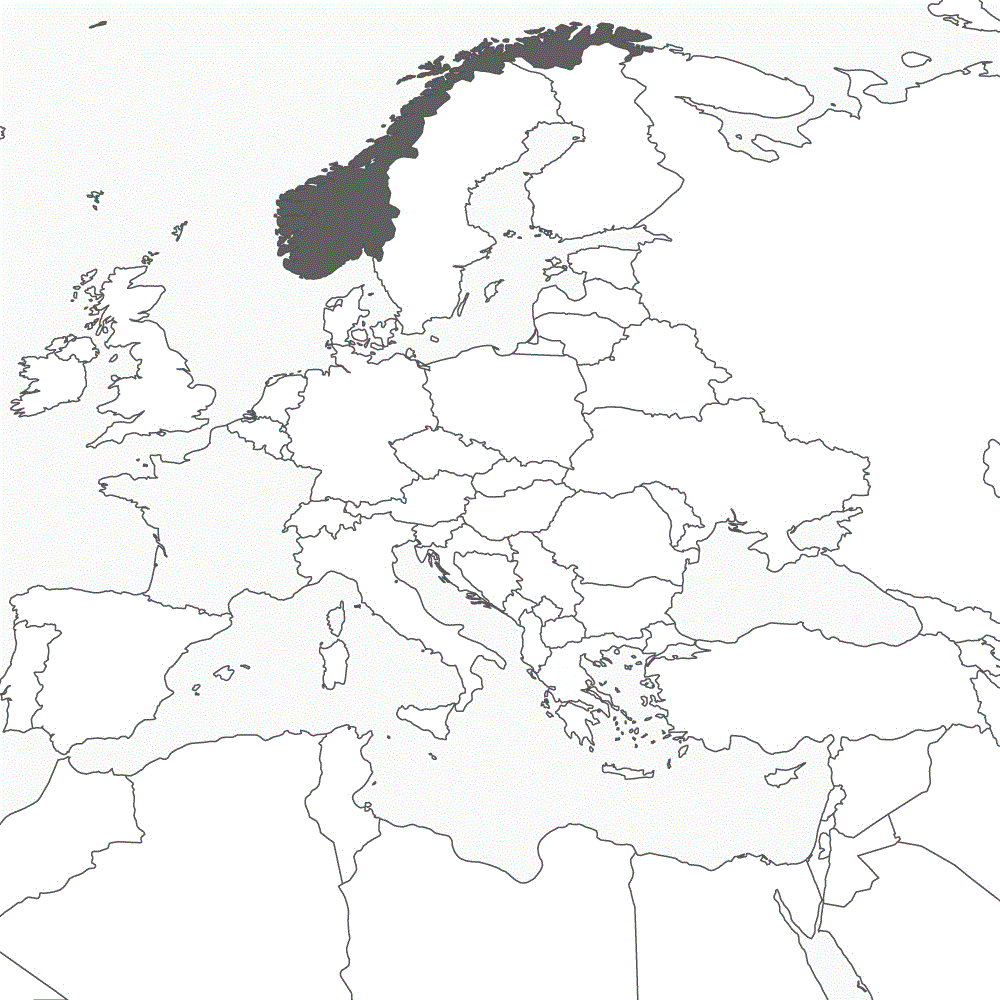
BERLIN/OSLO (Own report) - The escalating conflict with Russia is reaching the far north, prompting the Bundeswehr to upgrade and exercise for operations in the Norwegian Sea, according to a recent analysis by the German Institute for International and Security Affairs (SWP). As the analysis notes, particularly the sea passage between Greenland, Island and Great Britain ("GIUK Gap") is gaining importance. The Russian Navy must cross the "GIUK Gap" if it wants to enter the Atlantic. During the Cold War, the "GIUK Gap" was already considered highly important for preventing potential Soviet attacks on North American supplies to Europe or Soviet naval attacks on the United States. Iceland, located at the center of this maritime region, had "the geopolitical status of a sort of battlefield," noted former NATO Supreme Allied Commander James Stavridis. The Bundeswehr will be provided maritime reconnaissance aircraft and submarines worth billions of euros to operate in the "GIUK Gap." German and Dutch special forces are also jointly preparing for operations in the far north. Read more
GERMAN-FOREIGN-POLICY.com
Information on German Foreign Policy: News + Interviews + Analyses + Background