


“Footing the bill for both”
Interview with Peter Mertens on the current wave of widespread social protests in Belgium, the link between social cuts and militarisation, and the struggle for alternatives.
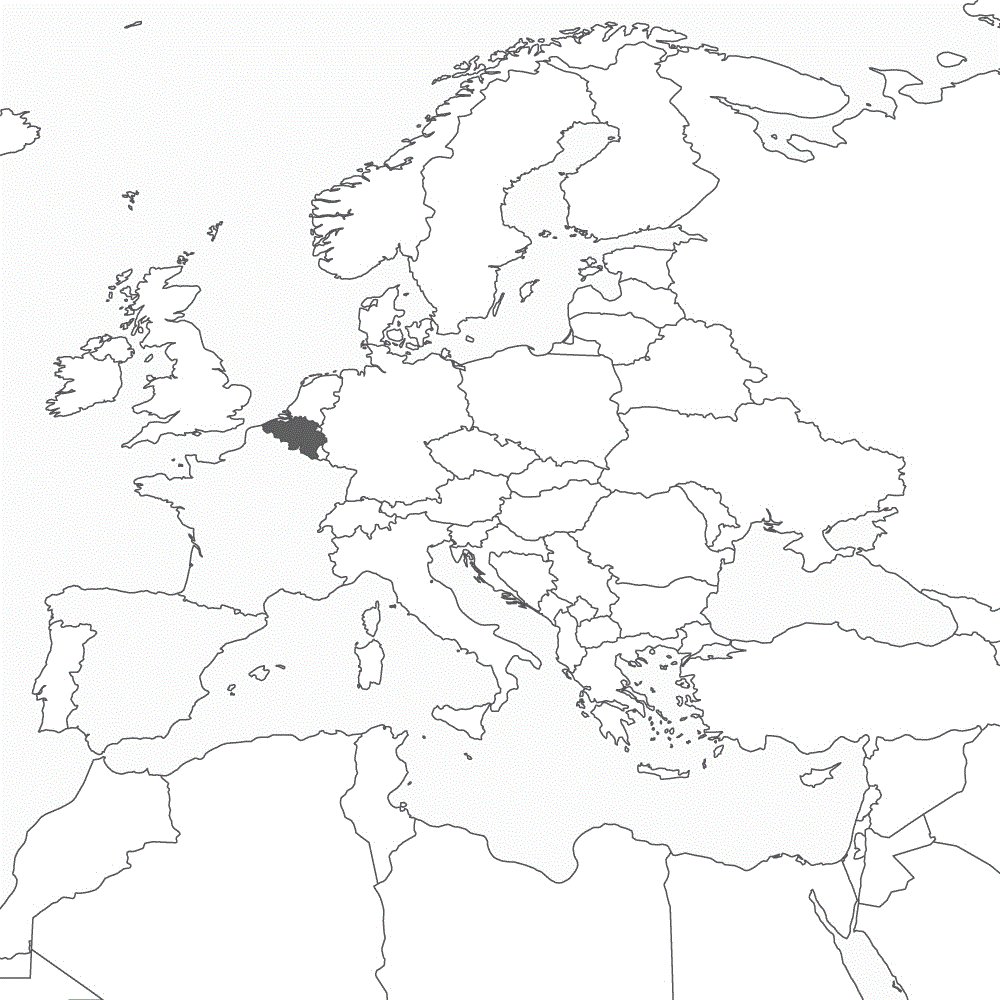
BRUXELLES german-foreign-policy.com spoke to Peter Mertens about the wave of protests in Belgium against the erosion of workers’ rights and social standards, which has been ongoing for more than a year. Mertens is an author and General Secretary of the Belgian Workers’ Party (PVDA-PTB), which has participated in the trade union-led demonstrations and strikes from the outset and is currently the strongest party in the capital region of Brussels, polling at more than a quarter of the vote. Mertens argues that the link between social protests and the fight against militarisation is obvious: “It is the same people who are footing the bill for both”; this is “impossible to ignore”. The protests are, not least, about restoring “people’s confidence in their collective strength”. Mertens points out that in 1945, even in the West, the power of huge corporations was regarded as one of the main causes of militarisation and war. His book “De laatste dagen van het oude normaal” (“The Last Days of the Old Normal”) is due to be published shortly. His most recent work is “Mutiny”. Read more
The militarisation of the world
New SIPRI data shows Germany and Europe driving the global arms race with double-digit increases in their military budgets. Global military spending reached new heights in 2025, while poverty and hunger are rampant.

BERLIN/BRUSSELS (own report) – With a double-digit increase in its military budget, Germany is driving forward Europe’s arms race; and Europe, also with double-digit defence budget growth, is fuelling the global arms race. This disturbing trend is quantified in the latest analysis of the development of global military expenditure by the SIPRI, the Stockholm International Peace Research Institute. According to SIPRI, spending on the Bundeswehr rose by 24 per cent to 114 billion US dollars in 2025, whilst Europe’s expenditure on the continent’s various armies grew by 14 per cent. This puts Germany and the European states at the forefront of the global arms race. Global military spending was up by 2.9 per cent to 2.887 trillion dollars last year. This means that, for the first time, 2.5 per cent of the combined economic output of all nations was squandered on weapons, whilst nearly a tenth of the world’s population continues to live in extreme poverty. What’s more, the wars resulting from this arms race are exacerbating hunger and misery. In Germany and the wider EU, it is also estimated that around a fifth of the population are at risk of poverty. Cuts in social expenditure are looming as the arms race ramps up. Read more
Back to Prussia
More and more German engineering firms opt for defence industry orders, hoping to escape the sector’s collapse. The Hannover Messe features an arms section for the first time. Dedicated military trade fairs now scheduled in Germany.
HANOVER (own report) – The German engineering industry has been plunged into a deep crisis. More and more companies are seeking to save themselves from losses or even bankruptcy by turning to defence production. The trend can be seen at this year’s Hannover Messe, which finishes today, Friday. For the first time the fair featured a dedicated section for companies integrated in military production as suppliers of all types of weapons components. The problems of Germany’s engineering sector have become increasingly acute. Production levels are collapsing and the workforce is steadily shrinking. Switching to defence manufacturing offers a way out. For instance, a maker of machinery for producing spark plugs explains that its machines can be easily adapted to the manufacture of cartridge cases. One advantage of the move to defence production is that companies will avoid the often fierce Chinese competition. Chinese firms are not in the running for defence contracts. The share of the engineering sector accounted for by defence could easily double, according to industry sources. The militarisation of the economy is also impacting the daily working lives of people in engineering and beyond. An increasing number of families are becoming materially dependent on the country’s military build-up. Read more
Orbán’s legacy, Magyar’s course
Following Péter Magyar’s victory in Hungary, EU pushes for swift reforms. Magyar seems willing, but won’t commit to all EU demands. German corporations are monitoring developments.
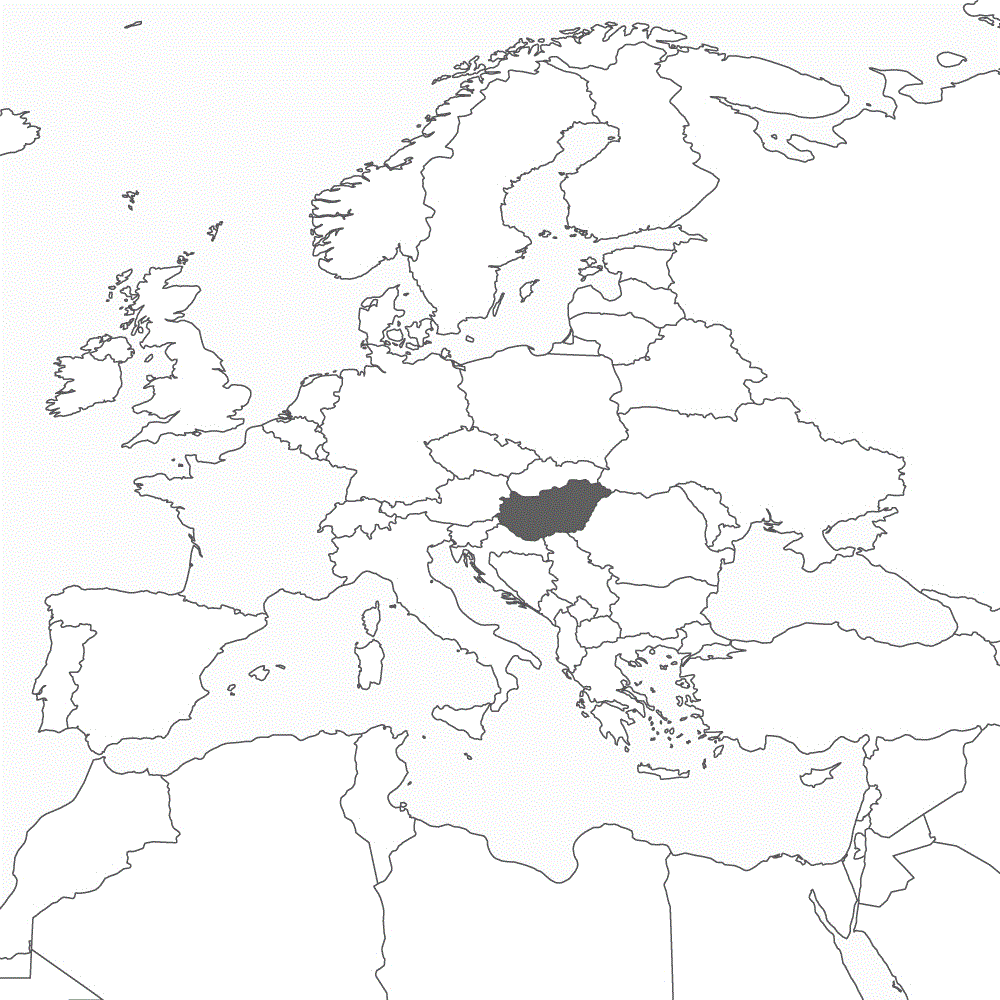
BRUSSELS/BERLIN/BUDAPEST (our own report) – Following the landslide victory of Péter Magyar’s Tisza party in the Hungarian election, initial signs of differences with EU policy and with the interests of German corporations are emerging. Magyar has pledged to anchor his country firmly within the EU and NATO. He also ran on a policy of introducing the euro. He is appointing a cabinet that will include managers from major corporations with transatlantic experience. This signals a departure from outgoing Prime Minister Viktor Orbán’s policy of cooperation with Russia. Yet Magyar is criticising the award of subsidies to large corporations and has said he would diversify the Hungarian economy. This means he may be distancing himself from German companies that have benefited for years from the political and financial support of the Orbán government in return for inward investment. There are just under 6,000 German companies operating in Hungary. They have transformed the country into a core element of Germany’s industrial backyard. In line with previous policy in Budapest, Magyar also rejects the EU Migration and Asylum Pact. Brussels has gone on the offensive: by August, Hungary must fulfil twenty-five reform requirements set by the European Commission in order to release the substantial funding frozen during Orbán’s term of office. Read more
Long-range drones for Ukraine
German-Ukrainian joint ventures launch production in Germany of drones that will reach 1,500 km – deep into the Russian hinterland. Moscow hints at targeting the factories.
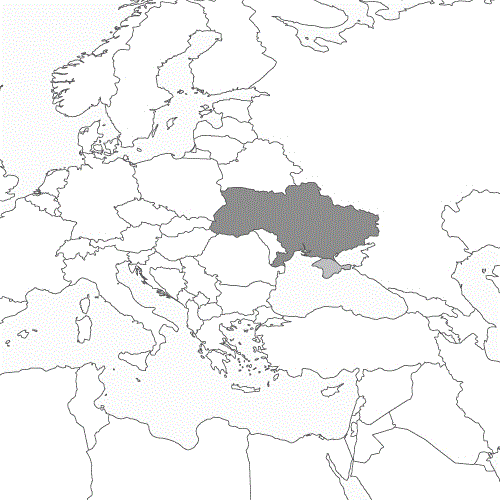
BERLIN/KIEV/MOSCOW (our own report) – The huge expansion of drone production in Germany and other Western European countries for use by the Ukrainian military has triggered Russian threats against the sites. Several German companies announced last week new agreements to establish joint ventures with Ukrainian drone manufacturers. Among others, a German software start-up, Auterion, plans to make drones with a range of 1,000 to 1,500 kilometres at a plant near Munich in collaboration with the Ukrainian firm Airlogix. These weapons will enable strikes deep within Russian territory. Such long-distance attacks by the Ukrainian armed forces have recently inflicted severe damage on Russia – hitting for instance, key oil facilities. Airlogix’s German production site is found on a list of twenty-one companies in various European countries that document a dangerous escalation. Through their arms production they are said to be dragging their host nations “into a war with Russia”. So far it has been Ukraine, not Russia, that has conducted attacks on Russian targets in third countries – specifically on tankers in the Mediterranean. Russia could well seek to emulate this practice, likewise striking targets in third countries, including companies that facilitate attacks on its territory. Read more
Carbon giants in court
Pakistani farmers are suing two big German corporations for losses from the 2022 climate change-driven flood disaster. RWE and Heidelberg Materials both rank as ‘carbon majors’ among the world’s top hundred CO2 emitters.
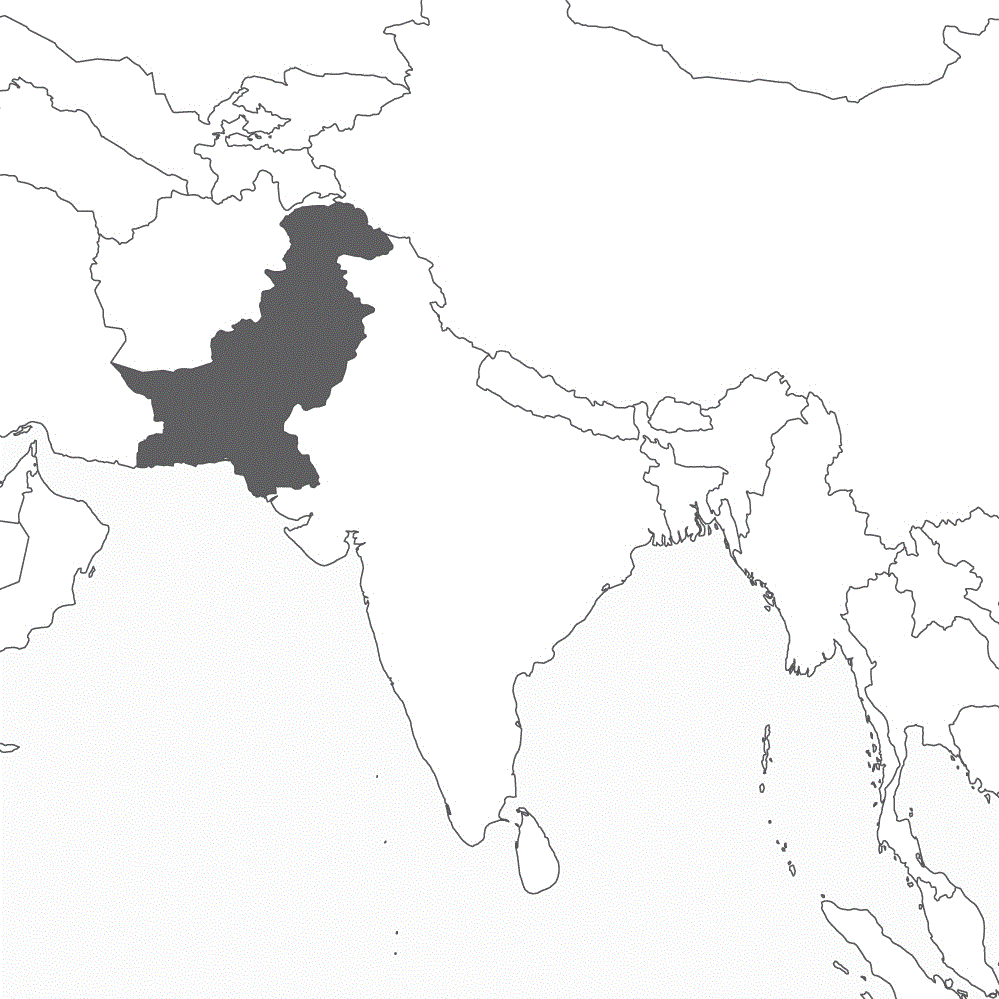
ISLAMABAD/BERLIN (our report) – Farmers from Pakistan are suing two German corporations, RWE and Heidelberg Materials, over the deadly and costly consequences of carbon emissions for which they are partly responsible. The lawsuit filed at Heidelberg District Court, entitled “Climate Cost Case Pakistan”, seeks partial compensation for the losses incurred by 39 Pakistani farmers as a result of the 2022 flood disaster. The floods were the worst in Pakistan’s history. They claimed over 1,700 lives, displaced around 33 million people and caused total damage to the country’s economy amounting to 30 billion dollars. Experts see that disaster as a clear consequence of climate change. RWE and Heidelberg Materials can be counted among the just over one hundred companies worldwide that together account for more than 70 per cent of historical industrial greenhouse gas emissions. The lawsuit is based on the legal principle of polluter-pays: those who cause damage must pay. A similar case against RWE was already filed by a Peruvian farmer back in 2015. Although it was ultimately thrown out, the competent German court did rule that companies can, in principle, be held liable for certain damages related to human-made climate change. Read more
The civilisation killers
Trump’s plan to block the Strait of Hormuz has met with approval in Berlin. Previously, Chancellor Merz had even expressed a degree of understanding for Trump’s threat to destroy Iranian civilisation.
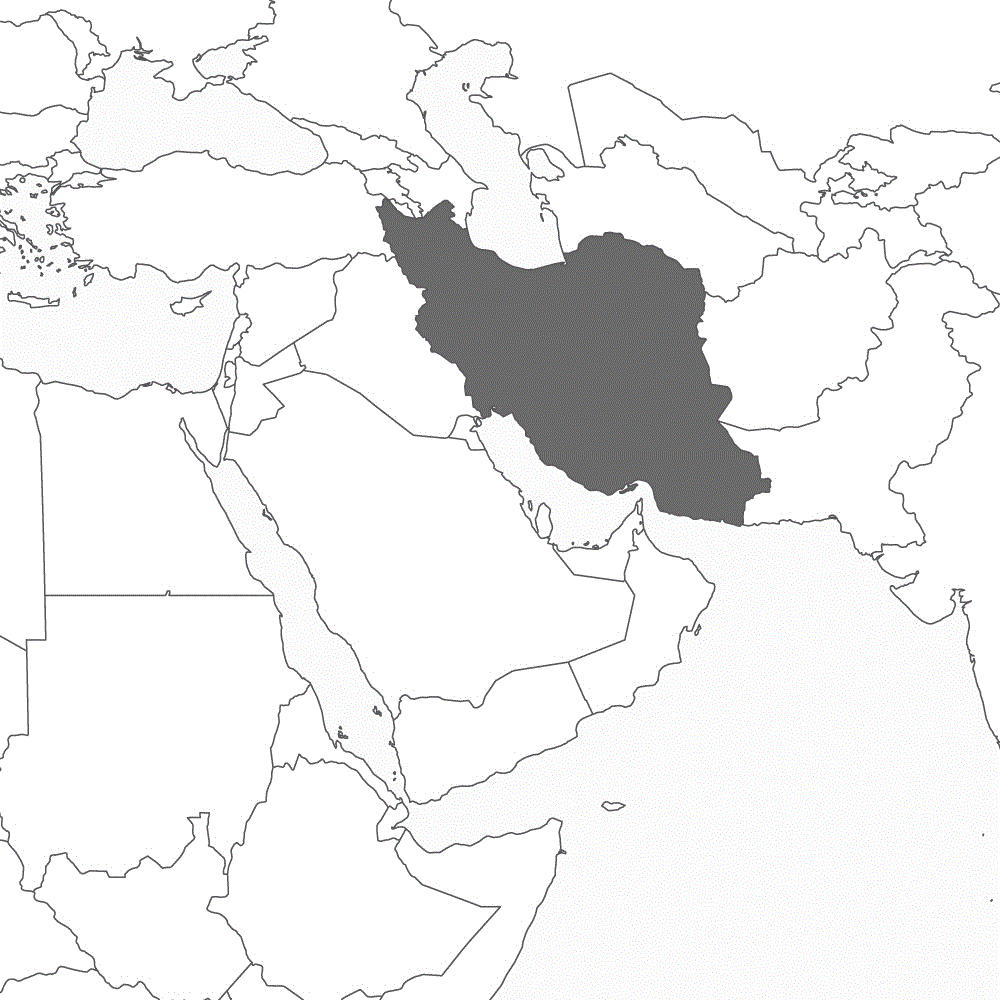
BERLIN/WASHINGTON/TEHRAN (our own report) – The naval blockade of the Strait of Hormuz announced by US President Trump has met with approval in Berlin. Steps by the United States were “long overdue” when it came to depriving Iran of any “use” of the strait and any revenues that Tehran can gain by exerting control, said CDU foreign policy expert Norbert Röttgen yesterday, Sunday. Trump had just declared that the US Navy would prevent all ships from passing through the Strait of Hormuz. The move to a naval blockade emerged from the breakdown of negotiations to resolve the conflict between Washington and Tehran. The US broke off talks by the United States over the weekend because Iran was not prepared accept “a deal”, i.e. to comply fully with US demands. The American air force would, Trump had already threatened, target bridges and power stations. He would bomb the country “back to the Stone Age”. The meeting in Islamabad took place under the shadow of Trump’s apocalyptic threat that “Iran’s civilisation will die”. The language sparked dismay and revulsion worldwide. Yet Trump’s stance met with a certain degree of understanding within the German government. Trump again issued an ultimatum on Sunday that without a deal his forces would “finish off the little that is left of Iran”. Read more
GERMAN-FOREIGN-POLICY.com
Information on German Foreign Policy: News + Interviews + Analyses + Background