


Zurück zu den Iran-Sanktionen
Deutschland, Frankreich und Großbritannien lösen den „Snapback“ im Atomabkommen mit Iran aus und bereiten so der Wiedereinführung von UN-Sanktionen den Weg – mit potenziell weitreichenden Folgen.
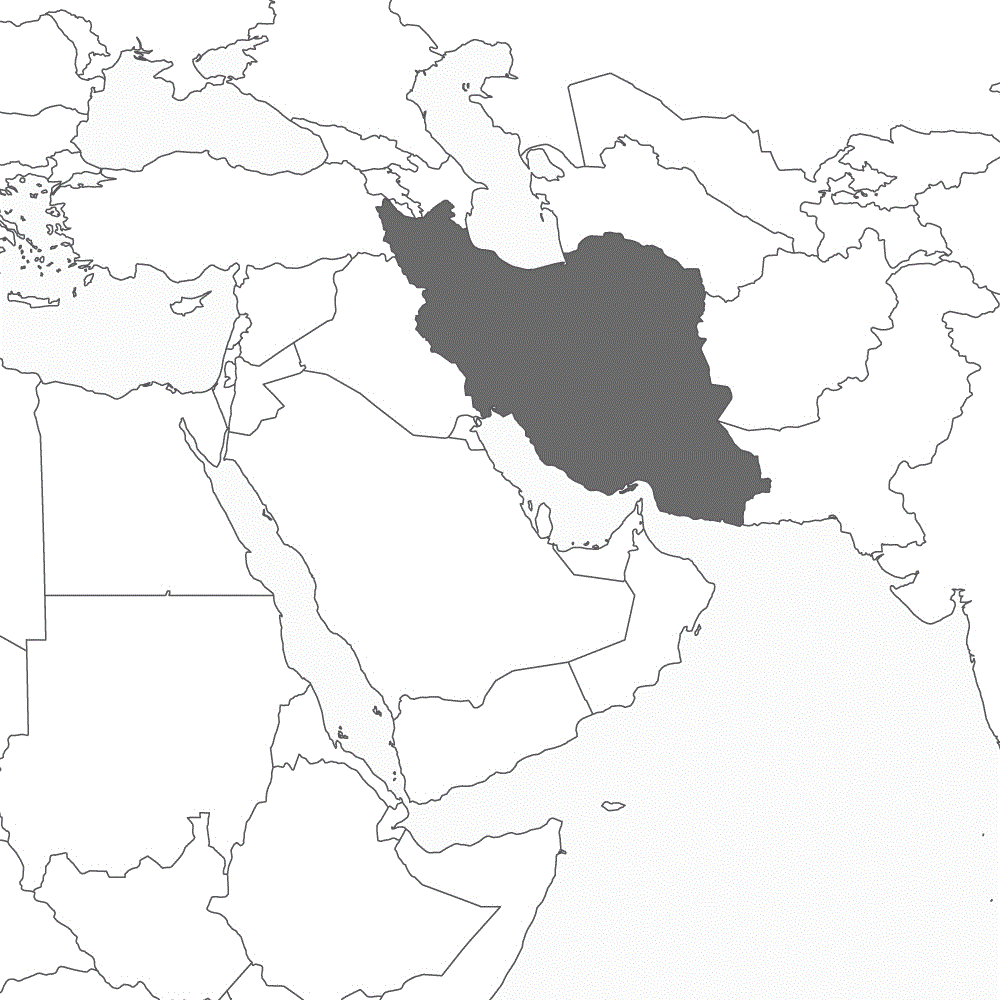
TEHERAN/BERLIN (Eigener Bericht) – Deutschland, Frankreich und Großbritannien haben am gestrigen Donnerstag den sogenannten Snapback gemäß dem Atomabkommen mit Iran ausgelöst und damit der Rückkehr zu alten UN-Sanktionen gegen das Land den Weg bereitet. Damit rückt die friedliche Beilegung des Konflikts in noch weitere Ferne. Zuvor hatten die drei europäischen Staaten (E3) Teheran mit faktisch unerfüllbaren Forderungen konfrontiert –etwa mit der Forderung, womöglich noch vorhandene Bestände an angereichertem Uran umstandslos offenzulegen. Die iranische Regierung rechnete bei einer derartigen Offenlegung mit einem erneuten israelisch-amerikanischen Angriff auf die eigenen Lagerstätten. In den Verhandlungen mit den E3 habe die iranische Seite ohnehin den Eindruck gehabt, „dass die Europäer seit dem Amtsantritt von Präsident Trump ... zunehmend an Bedeutung verlieren“, berichtete unlängst Irans stellvertretender Außenminister Saeed Khatibzadeh: „Die Europäer“ hätten gezeigt, dass sie zu einer Tätigkeit „als Vermittler ... nicht in der Lage sind“. Eine Wiederinkraftsetzung der alten UN-Sanktionen droht äußerst weitreichende Folgen hervorzubringen – für Iran, aber auch für die Vereinten Nationen. ex.klusiv
Arbeitskräfteimport aus Indien
Deutschland will die Einwanderung indischer Fach- und Pflegekräfte zur Deckung des Arbeitskräftebedarfs weiter steigern und ökonomisch unerwünschte Inder stärker abschieben. Die bisherige Bilanz fällt gemischt aus.
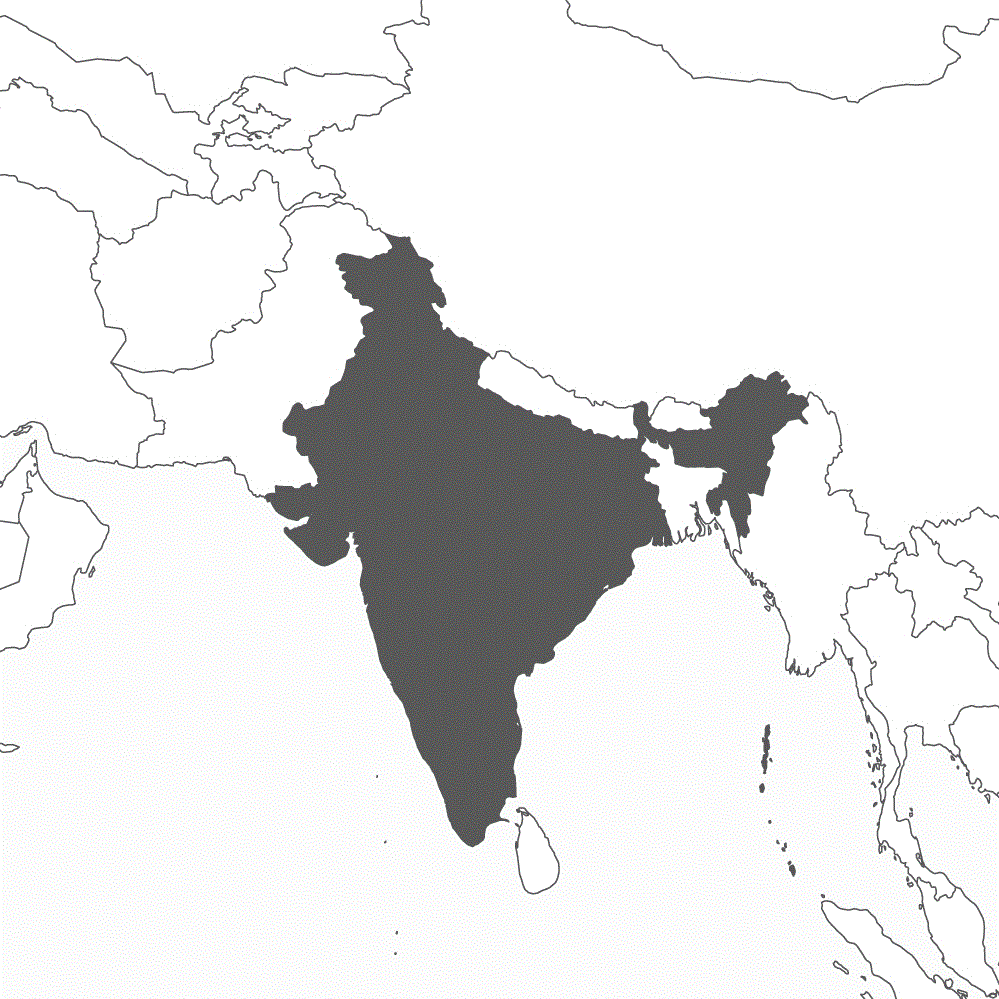
BERLIN/NEW DELHI (Eigener Bericht) – Die Bundesrepublik erzielt bei der Anwerbung indischer Fach- und Pflegekräfte zur Deckung des deutschen Arbeitskräftebedarfs bislang nur eine gemischte Bilanz. Dies geht aus aktuellen Analysen hervor, darunter eine Studie der Berliner Stiftung Wissenschaft und Politik (SWP). Demnach ist Deutschland zunehmend auf Drittstaaten wie Indien angewiesen, um seinen Arbeitskräftebedarf etwa in den Bereichen Mathematik, Informatik, Naturwissenschaften und Technik (MINT-Fächer) sowie in der Pflege zu decken. Trotz gewisser Erfolge sinkt allerdings etwa der Anteil der in Deutschland stark nachgefragten indischen IT-Fachkräfte; zudem erhält die Bundesrepublik zwar eine hohe Zahl von Bewerbungen indischer Studenten, kaum jedoch solcher von Indiens führenden Universitäten. Berlin beklagt sich zudem über eine mangelnde Rücknahme ökonomisch nicht erwünschter indischer Asylbewerber durch New Delhi. Deutlich verstärkt worden ist in den vergangenen Jahren die Anwerbung von Pflegepersonal vor allem aus dem südindischen Bundesstaat Kerala. Diese hat ihre Ursprünge bereits in den 1960er Jahren und trägt zu einem gravierenden Mangel an Pflegepersonal in Indien bei. ex.klusiv
Wohin ein solcher Wahnsinn führt
Rheinmetall eröffnet Deutschlands größte Munitionsfabrik und will zu den weltgrößten Rüstungskonzernen aufschließen. Berlin stellt zur Finanzierung Sozialkahlschlag in Aussicht. Kriegsgegner sind zunehmend Repression ausgesetzt.

DÜSSELDORF/BERLIN (Eigener Bericht) – Rheinmetall eröffnet Deutschlands größte Munitionsfabrik, rechnet mit Rüstungsaufträgen in dreistelliger Milliardenhöhe und will zu den größten Rüstungskonzernen der Welt aufschließen. In der neuen Munitionsfabrik in Unterlüß, die am heutigen Mittwoch im Beisein von Verteidigungsminister Boris Pistorius, Finanzminister Lars Klingbeil und NATO-Generalsekretär Mark Rutte eröffnet werden soll, will Rheinmetall künftig bis zu 350.000 Artilleriegranaten jährlich produzieren. Der Höhenflug der Unternehmens dauert an; bis 2030 werde man womöglich Rüstungsaufträge im Wert von bis zu 300 Milliarden Euro akquirieren können, sagt Firmenchef Armin Papperger voraus. Papperger stebt bis 2030 einen Konzernumsatz von bis zu 50 Milliarden Euro an. Auf diesem Niveau bewegen sich heute die zwei größten Waffenschmieden der Welt, Lockheed Martin und RTX (beide USA). Während Berlin brutale Sozialkürzungen in Aussicht nimmt, um die Hochrüstung zu finanzieren, nimmt die Repression gegen Kriegsgegner zu. Ein am Dienstag eröffnetes Anti-Kriegs-Camp in Köln war zuerst wegen der Nutzung der Parole „Krieg dem Kriege“ verboten worden. Diese entstammt einem 1919 publizierten Gedicht des Schriftstellers Kurt Tucholsky. ex.klusiv
Das Recht des Stärkeren
Der EU-Zolldeal mit den USA wird von Experten als „katastrophal“ für die EU-Wirtschaft eingestuft, die in rasant zunehmende Abhängigkeit von der Trump-Regierung gerät. Diese zieht nun Sanktionen gegen EU-Repräsentanten in Betracht.
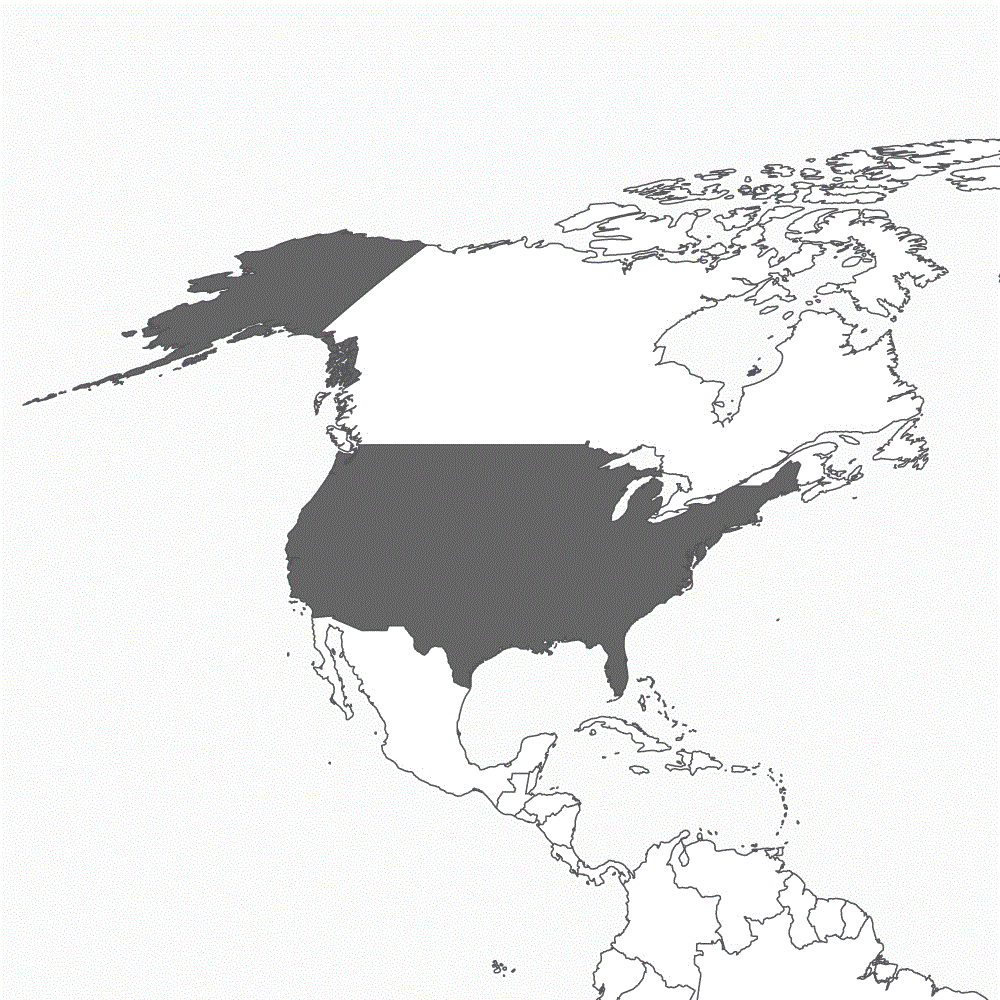
WASHINGTON/BRÜSSEL (Eigener Bericht) – Die Trump-Administration zieht Sanktionen gegen Repräsentanten der EU sowie ihrer Mitgliedstaaten in Betracht, die für die Umsetzung von EU-Regeln für Online-Plattformen Verantwortung tragen. Berichten zufolge könnten sie zum Beispiel mit einer Visasperre belegt werden. Hintergrund ist, dass die US-Internetkonzerne die in der EU geltende Pflicht als lästig empfinden, offen diskriminierende, NS-verherrlichende oder anderweitig volksverhetzende Inhalte gemäß dem Digital Services Act etwa aus sozialen Medien zu entfernen. Die Debatte über Sanktionen erfolgt, nachdem es der US-Regierung gelungen ist, in den Zollverhandlungen mit der EU ihre Ziele umfänglich durchzusetzen und der EU-Kommission eine Vereinbarung aufzunötigen, die von Experten als „katastrophal“ für die Wirtschaft der EU eingestuft wird. So werden auf Lieferungen aus der EU in die USA künftig Zölle in Höhe von 15 Prozent erhoben; Lieferungen aus den USA in die EU sollen hingegen zollfrei sein. Zudem dringt Washington auf Maßnahmen, die die EU bei wichtigen Rohstoffen in offene Abhängigkeit von den USA bringen. Nicht zuletzt soll die EU ihr Chinageschäft massiv reduzieren und alternativlos an die USA gebunden sein. ex.klusiv
Rüstungskooperation um jeden Preis
Deutschland setzt seine Rüstungskooperation mit Israel ungeachtet wachsender nationaler und internationaler Proteste gegen die israelische Kriegsführung sowie trotz der mutwillig herbeigeführte Hungersnot in Gaza fort.
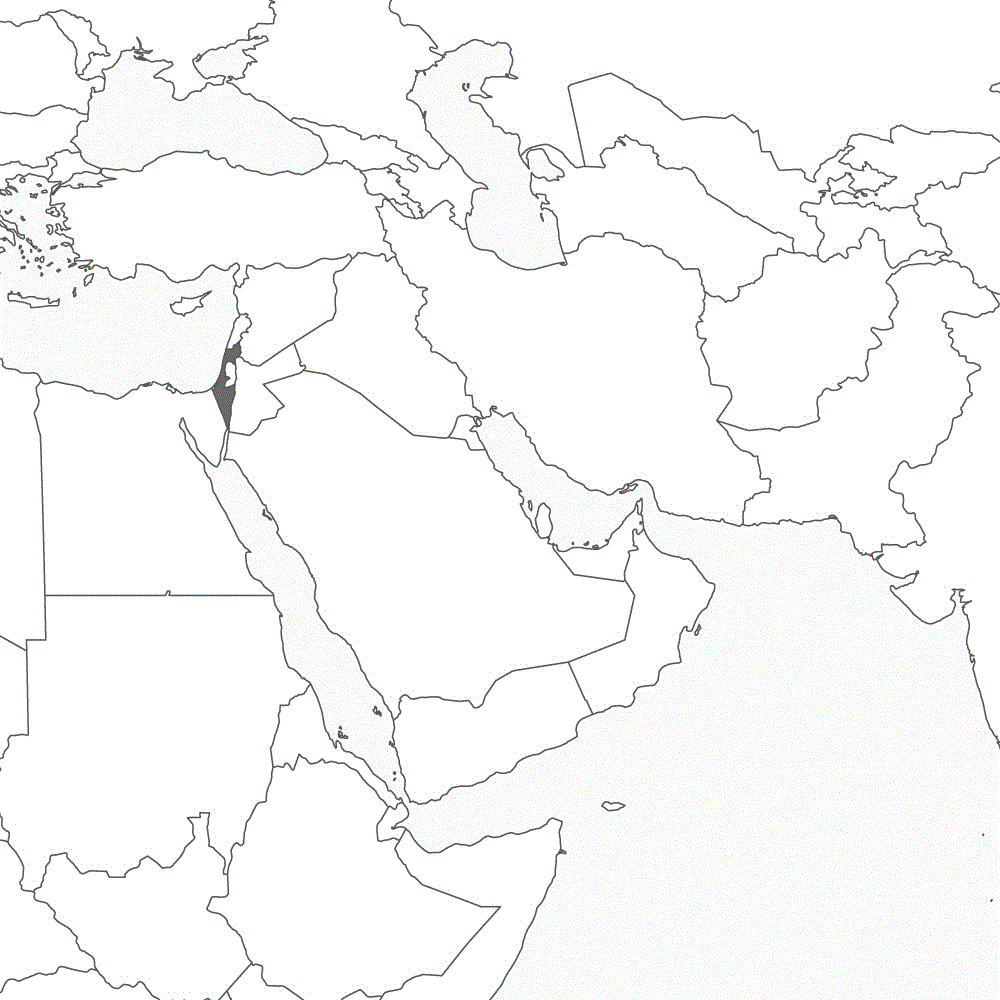
TEL AVIV/BERLIN (Eigener Bericht) – Ungeachtet jüngster Berichte über die exzessiv hohe Zahl an zivilen Todesopfern im Gazakrieg und trotz der offiziellen Einstufung der Lage in Gaza als Hungersnot hält Deutschland an der Unterstützung für Israels Streitkräfte fest. Aktuelle Recherchen des israelischen Magazins +972 zeigen, dass mindestens 83 Prozent aller Todesopfer im Gazastreifen Zivilisten sind. Die Zahl der Menschen, die im Gazastreifen verhungert sind, da Israels Rechtsaußenregierung Hilfslieferungen mutwillig blockiert, wird bereits mit beinahe 300 angegeben. Die Ankündigung von Bundeskanzler Friedrich Merz, bestimmte Waffenlieferungen nicht mehr zu genehmigen, erweist sich als wenig wirksam; sie betrifft den Großteil der deutschen Rüstungsexporte nach Israel nicht. Außerdem steigert die Bundesrepublik die Einfuhr von Rüstungsprodukten aus Israel. Berlin hat dabei vor allem die Ausweitung der Zusammenarbeit mit Start-ups im Visier, die in Gaza die Kriegsführung mit Künstlicher Intelligenz (KI) erproben; es hat den Ausschluss israelischer Start-ups von der EU-Forschungsförderung blockiert. Dabei nehmen auch in Israel selbst die Proteste gegen die Kriegspläne der israelischen Regierung zu. ex.klusiv
AACHEN german-foreign-policy.com legt bis zum 23. August 2025 eine Sommerpause ein. Danach liefern wir wieder in gewohnter Regelmäßigkeit Nachrichten, Interviews und Hintergrundinformationen zur deutschen Außenpolitik. Bitte greifen Sie bis dahin auf unser Archiv zurück. Die Redaktion ex.klusiv
Ein Plan zu Russlands „Entmachtung“
Ein neues Strategiepapier der EU-Denkfabrik EUISS fordert, die EU müsse Russland in den Schwerpunktregionen seiner Außenpolitik „entmachten“. Das Dokument legt Vorschläge für praktische EU-Maßnahmen gegen Russland vor.
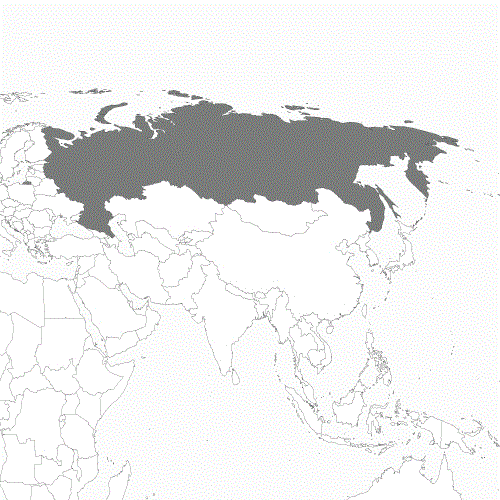
PARIS (Eigener Bericht) – Das Institut der Europäischen Union für Sicherheitsstudien (EUISS) veröffentlicht ein neues strategisches Handbuch mit Vorschlägen zur „Entmachtung“ Russlands in den Schwerpunktregionen seiner Außenpolitik. Das Dokument aus der Reihe der Chaillot Papers, der Flaggschiff-Publikation des EUISS, befasst sich neben einer Analyse etwa von Russlands „hybrider Kriegsführung“ vor allem mit seiner Position in fünf strategisch wichtigen Weltgegenden – in China, der Asien-Pazifik-Region, dem südlichen Mittelmeerraum, Südosteuropa und Subsahara-Afrika. So heißt es etwa, China sei zwar Russlands wichtigster strategischer Kooperationspartner; doch habe sich gezeigt, dass Beijing auf Druck reagiere, was die EU ausnutzen könne. Auf die Asien-Pazifik-Region wiederum sei Russland angewiesen, um mit seinen Ölexporten die Sanktionen zu umgehen. Im südlichen Mittelmeerraum hingegen habe Moskau mit dem Sturz der Assad-Regierung einen Rückschlag erlitten. Während es in Südosteuropa bemüht sei, die Expansion vor allem der NATO zu verhindern, setze es sich in Subsahara-Afrika militärisch und mit Auslandssendern fest. Dort könne die EU Russlands Einfluss mit Propagandakampagnen entgegenwirken. Read more
Wehrdienst im Drohnenkrieg
Die Bundeswehr hat ihre Grundausbildung mit Blick auf die russische Kriegsführung in der Ukraine angepasst. Der Kampf mit und gegen Kleinstdrohnen sowie der sogenannte Heimatschutz stehen im Zentrum des Neuen Wehrdienstes.
BERLIN (Eigener Bericht) – Im neuen Ausbildungsprogramm der Bundeswehr werden Rekruten bereits in ihrer Grundausbildung mit Angriffen von Drohnen ähnlich denjenigen im Ukraine-Krieg konfrontiert. Die deutsche Armee gibt an, bei den inhaltlichen Änderungen der Grundausbildung, die zum 1. Juli in Kraft gesetzt wurden, vor allem auch die Lehren aus der russischen Kriegsführung in der Ukraine gezogen zu haben. Insbesondere Kleinstdrohnen haben sich dort als effiziente und kostengünstige Waffen etabliert. Mit dem neuen Ausbildungsprogramm will Berlin in den kommenden Jahren eine sechsstellige Zahl an neuen Reservisten ausbilden. Die Bundeswehr plant für den Fall eines direkten Krieges mit Moskau, einen Großteil der deutschen Berufssoldaten an die Ostfront zu verlegen. Auf deutschem Territorium sollen im Kriegsfall hauptsächlich Reservisten eingesetzt werden – im sogenannten Heimatschutz. Um die notwendige Zahl an Rekruten zur Verfügung zu haben, soll auf einen „Neuen Wehrdienst“ umgestellt und bis Ende August ein Gesetz verabschiedet werden, das die Wehrerfassung ermöglicht. Es soll bereits Passagen enthalten, die eine kurzfristige Reaktivierung der Wehrpflicht ermöglichen. Read more
„Zurück zu echter Neutralität“
Interview mit Gerald Oberansmayr über Österreichs Neutralität, deren systematische Aufweichung durch die EU und die Bemühungen um eine Rückkehr zu echter Neutralität.
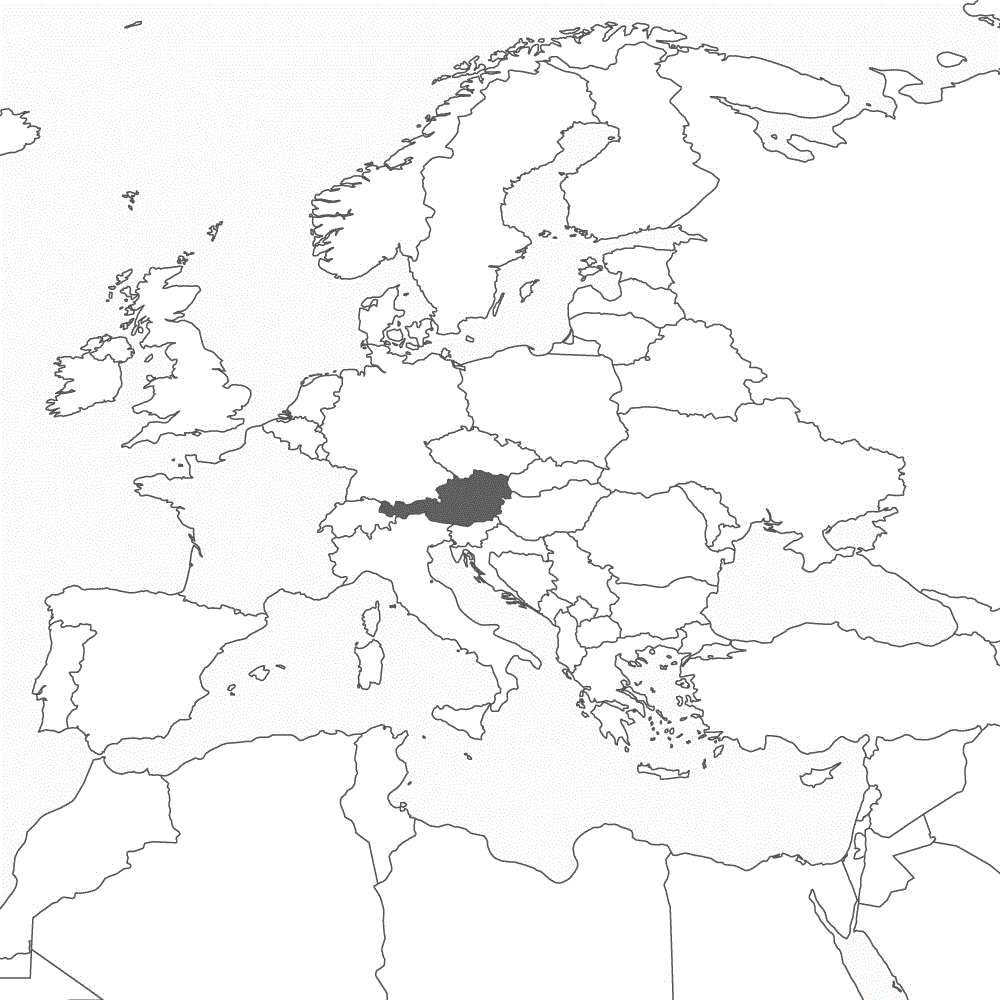
LINZ – Über Österreichs Neutralität sprach german-foreign-policy.com mit Gerald Oberansmayr. Oberansmayr ist Aktivist der Solidarwerkstatt Österreich, die sich für eine „echte Friedens- und Neutralitätspolitik“ einsetzt. Von einer solchen kann in Österreich, wie Oberansmayr berichtet, zur Zeit keine Rede sein. Vielmehr haben Österreichs Regierungen die Neutralität des Landes insbesondere seit dem EU-Beitritt im Jahr 1995 systematisch aufgeweicht – unter anderem durch die Eingliederung in EU-Militärstrukturen, durch die Beteiligung an der massiven Aufrüstung der EU und durch die im Österreichischen Staatsvertrag von 1955 ursprünglich verbotene militärische Kooperation mit der deutschen Bundeswehr. Diese ist mittlerweile eng; bereits vor geraumer Zeit erklärte der Streitkräfte-Kommandant des österreichischen Bundesheeres: „Wenn man heute nach Deutschland fährt, ist das keine Auslandsdienstreise mehr.“ Die Bundesrepublik setze sich über die österreichische Neutralität umstandslos hinweg, berichtet Oberansmayr, der einen früheren deutschen Botschafter in Wien mit der Aussage zitiert: „Solange ihr mit uns in den Krieg zieht, ist uns euer Status egal.“ Read more
GERMAN-FOREIGN-POLICY.com
Information on German Foreign Policy: News + Interviews + Analyses + Background