


Transatlantische Weltraumrivalen
Airbus, Leonardo und Thales schließen ihre Raumfahrtaktivitäten zu einem europäischen Joint Venture zusammen, um mit Elon Musks Unternehmen Starlink konkurrieren zu können. Dies führt zu neuen Spannungen mit den USA.
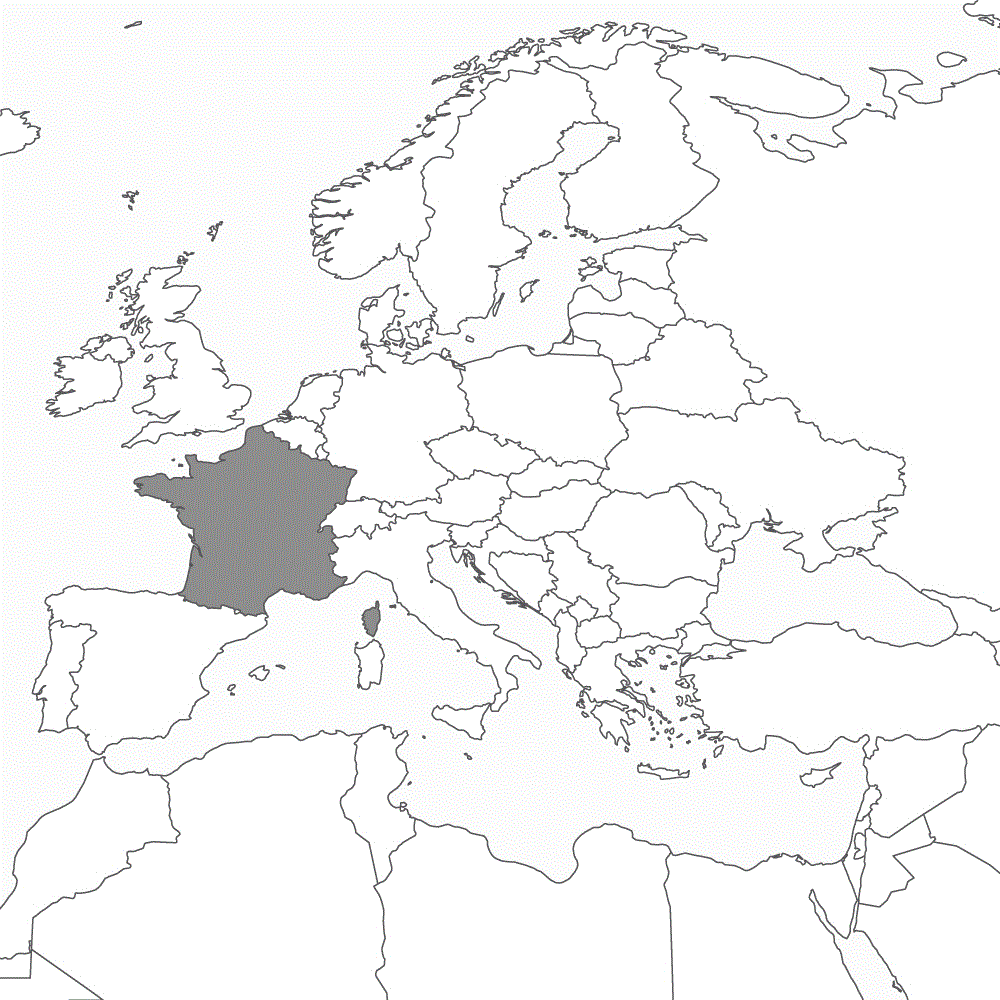
BERLIN/PARIS/ROM (Eigener Bericht) – Die europäischen Raumfahrtunternehmen Airbus, Leonardo und Thales kündigen die Zusammenlegung ihrer Raumfahrtaktivitäten an. Das neue Joint Venture mit dem Namen „Projekt Bromo” soll seinen Sitz in Toulouse (Frankreich) haben und rund 25.000 Mitarbeiter in ganz Europa beschäftigen. Die Aufteilung der Anteile zwischen den drei Unternehmen steht bereits fest; doch muss das Projekt noch einige Hürden nehmen, darunter die wettbewerbsrechtliche Prüfung durch die EU-Kommission. Die europäischen Konzerne stehen in einem harten Wettbewerb mit dem US-Unternehmen Starlink, das erfolgreich in den europäischen Raumfahrtmarkt vorgedrungen ist. Airbus, Thales und Leonardo hingegen haben im vergangenen Jahr Verluste verzeichnet. Die EU hat kürzlich einen Entwurf für ein EU-Weltraumgesetz vorgelegt, das den EU-Weltraummarkt harmonisieren und ausländischen Unternehmen Compliance-Kosten auferlegen soll. Dies ruft neue Spannungen mit den USA hervor. Die Nachricht von der geplanten Fusion kommt zu einem Zeitpunkt, an dem die EU Anstrengungen unternimmt, ihrer starken Abhängigkeit von den USA in der Raumfahrt durch den Aufbau eigener Kapazitäten zu entkommen. ex.klusiv
Kriegstüchtige Geheimdienste
Deutsche Geheimdienste sprechen, ohne Beweise zu präsentieren, von weitreichenden hybriden Angriffen Russlands in Deutschland und fordern größere rechtliche Handlungsspielräume für die Konfrontation mit Moskau.
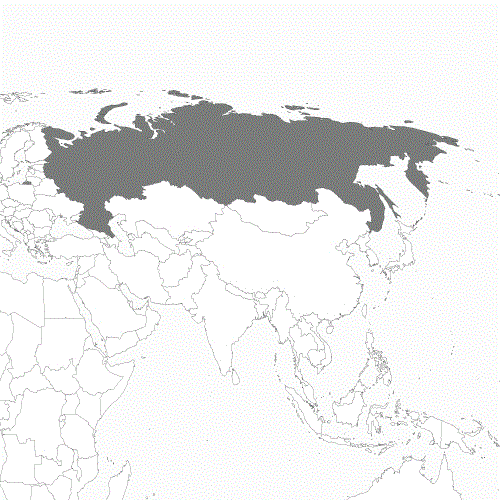
BERLIN (Eigener Bericht) – Die deutschen Geheimdienste – Militärischer Abschirmdienst (MAD), Bundesnachrichtendienst (BND) und Verfassungsschutz – warnen vor sogenannten hybriden Angriffen Russlands in Deutschland und fordern in diesem Zusammenhang von der Politik größere rechtliche Handlungsspielräume. Um die Befugnisse des MAD auszuweiten, hat Verteidigungsminister Boris Pistorius bereits einen Gesetzesentwurf vorgelegt. Dieser sieht auch eine Ausweitung der Befugnisse der Militärpolizei auf den zivilen Bereich und eine Beschleunigung der Sicherheitsüberprüfung von Rekruten vor. Die Präsidenten der Geheimdienste räumen dabei ein, dass die „hybriden Angriffe“, für die sie Russland verantwortlich machen, sich gerade dadurch auszeichnen, dass die verantwortlichen Akteure nicht eindeutig zu bestimmen sind. Umgekehrt drohen Kritiker der Ukraine-Politik der Bundesregierung unter Generalverdacht gestellt zu werden, Agenten der russischen hybriden Kriegführung zu sein. Mit dem Diskurs um die „hybride Kriegsführung“ verwischen Geheimdienstler, Medien und Politiker nicht nur die Grenze zwischen Kritikern der deutschen Regierung und Agenten Russlands, sondern auch die Grenze zwischen Krieg und Frieden. ex.klusiv
„Wunsch nach klarer Friedenspolitik“
Interview mit Ulrike Eifler über die Lage der Gewerkschaften unter dem Eindruck der Kriegsvorbereitungen, über den drohenden Sozialkahlschlag und über den energischen Kampf vieler Gewerkschafter für den Frieden.
WÜRZBURG Über die Lage der Gewerkschaften unter dem Eindruck der aktuellen Kriegsvorbereitungen durch die Bundesregierung sprach german-foreign-policy.com mit Ulrike Eifler. Eifler, Gewerkschafterin in Würzburg, Mitglied im Parteivorstand von Die Linke sowie Mitorganisatorin der „Gewerkschaftskonferenzen für den Frieden“, sieht die Gewerkschaften gegenwärtig unter dem Druck von Deindustrialisierung und Umleitung sämtlicher verfügbaren staatlichen Ressourcen in die Militarisierung von Wirtschaft und Gesellschaft in einer schwierigen Lage. Sie weist allerdings auf die historische Rolle von Arbeitskämpfen bei der Beendigung von Kriegen hin – und auf die Rolle von Gewerkschaften in den Massenprotesten gegen die Hochrüstung in den 1980er Jahren, in den Protesten gegen die Irak-Kriege 1991 und 2003 und international auch gegen den Gaza-Krieg. In Deutschland freilich habe es eine größere Zurückhaltung gegeben. Eifler dringt auf eine enge Einbindung der Gewerkschaften in die Kämpfe gegen Krieg und Militarisierung und warnt, die Unionsparteien orientierten zur Absicherung ihrer Deregulierungspläne „immer stärker auf die AfD“. Read more
Rezension: Gewerkschaften in der Zeitenwende
Ulrike Eifler beleuchtet in einem Sammelband die Lage der Gewerkschaften inmitten der aktuellen Militarisierung, deren Folgen für Arbeitswelt und Sozialstaat und die Möglichkeiten für den Widerstand dagegen.
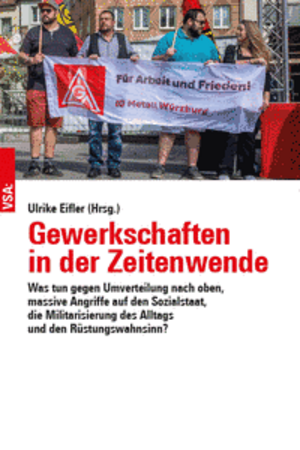
„Kriegsvorbereitungen und vor allem der Krieg selbst gehen stets mit enormen Angriffen auf die Arbeits- und Lebensbedingungen der arbeitenden Klassen einher“: Das ist, schreibt Ulrike Eifler in dem von ihr herausgegebenen, soeben erschienenen Sammelband „Gewerkschaften in der Zeitenwende“, eine der Lehren, die man aus der Geschichte ziehen kann. Das gilt zum einen, weil auf den Schlachtfeldern der Vergangenheit „nie Verteidigungsminister, Militärexperten, Militärhistoriker oder Rüstungsfabrikanten gekämpft“ haben, immer aber „der Mann der Arbeit“, wie Eifler konstatiert. Es gilt zum anderen, weil Kriege stets den Abbau von Arbeitsrechten, von Löhnen und von existenziellen Sicherheiten mit sich bringen – „insbesondere für diejenigen, die am meisten darauf angewiesen sind“. Gewerkschaften, betont Eifler, selbst Gewerkschafterin in Würzbürg, haben schon aus diesen Gründen ein „hervorgehobenes Interesse an einer friedlichen Welt“. Vor diesem Hintergrund fragt sie in ihrem facettenreichen Sammelband zunächst nach „den Auswirkungen der aktuellen Kriegsvorbereitungspolitik auf die Welt der Arbeit“. ex.klusiv
Die ultrarechte Renaissance des Westens
Im Europaparlament zeichnet sich eine weitere Intensivierung der Kooperation mit der extremen Rechten ab, während Merz die Debatte in Deutschland nach rechts treibt – und die AfD sich mit Blick auf Trump etabliert transatlantisch gibt.

BERLIN/BRÜSSEL (Eigener Bericht) – Im Europaparlament zeichnet sich eine weitere Intensivierung der Kooperation zwischen der konservativen EVP und den Fraktionen der äußersten Rechten ab. Auslöser ist, dass in der vergangenen Woche die von der EVP geplante Abschwächung der Lieferkettenrichtlinie gescheitert ist, vermutlich an Mitgliedern der sozialdemokratischen Fraktion. Das sei „inakzeptabel“, hatte Bundeskanzler Friedrich Merz auf dem EU-Gipfel geäußert: „Das kann so nicht bleiben“. Parlamentspräsidentin Roberta Metsola (EVP) hatte daraufhin eine erneute Abstimmung mit einer alternativen Mehrheit in Aussicht gestellt. Dies bezieht sich auf eine Mehrheit der EVP mit den ultrarechten Fraktionen der Europäischen Konservativen und Reformer (EKR) sowie der Patrioten für Europa (PfE). Der Schritt erfolgt, während in Deutschland in der CDU Forderungen lauter werden, mit der AfD auf die eine oder andere Weise zu kooperieren, und Bundeskanzler Friedrich Merz mit Verbalattacken auf Migranten, die angeblich im „Stadtbild“ störten, die öffentliche Debatte nach rechts treibt. Zugleich gibt sich die AfD-Bundestagsfraktion kompromissbereit und spricht sich für transatlantische Kooperation aus – mit der Trump-Administration. ex.klusiv
Am kürzeren Hebel
Außenminister Wadephul sagt lange geplante China-Reise ab, weil er nach allerlei Attacken gegen Beijing nicht die gewünschten Gesprächstermine bekam. Die Industrie der EU ist von akutem Mangel an Seltenen Erden und Chips aus China bedroht.
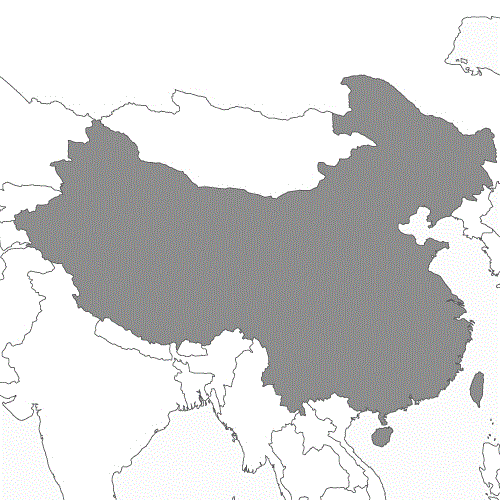
BERLIN/BEIJING (Eigener Bericht) – Die deutsche Absage einer lange geplanten China-Reise von Außenminister Johann Wadephul trübt die Hoffnung auf ein mögliches Ende der Sanktionsspirale zwischen der EU und der Volksrepublik. Die EU hat jüngst immer wieder Sanktionen gegen chinesische Unternehmen verhängt und weitere angedroht. Zudem hat Deutschland begonnen, seine Zusammenarbeit mit Taiwan qualitativ auszuweiten: auf Angebote für Rüstungslieferungen, wie sie gewöhnlich nur in souveräne Staaten getätigt werden. Beijing hat auf die EU-Attacken mit strengen Exportkontrollen auf Seltene Erden reagiert und Außenminister Wadephul bei seinem geplanten Besuch lediglich ein Treffen mit seinem chinesischen Amtskollegen Wang Yi zugestanden. Wadephul, der allerlei weitere Gespräche führen wollte, hat seine Reise nun auf unbestimmte Zeit verschoben. Damit rückt eine Lösung in den Konflikten zwischen Brüssel und Beijing in die Ferne. Dies geschieht, während die USA noch in dieser Woche auf eine Art Waffenstillstand im Handelskrieg hoffen. Zudem ist die europäische Industrie von akutem Mangel an Seltenen Erden und an Halbleitern bedroht und sitzt in den Auseinandersetzungen, die sie verschärft, wohl am kürzeren Hebel. ex.klusiv
Den Atomkrieg üben
Das diesjährige Atomkriegsmanöver „Steadfast Noon“ geht heute mit deutscher Beteiligung zu Ende. Die Debatte über einen europäischen Nuklearschirm oder eine deutsche Atombombe dauert an.
VOLKEL/BERLIN (Eigener Bericht) – 14 NATO-Staaten, darunter Deutschland, schließen am heutigen Freitag ihr diesjähriges Atomkriegsmanöver ab. Das Manöver „Steadfast Noon“, das jedes Jahr im Oktober durchgeführt wird, exerziert einen etwaigen Angriff mit in Europa gelagerten US-Kernwaffen durch. Als Träger- bzw. Abwurfflugzeuge kommen auch Jets der deutschen Luftwaffe in Frage. Die Bereitschaft, sich an einem Atomkrieg zu beteiligen, steigt in Europa; so nahmen an Steadfast Noon in diesem Jahr erstmals die neuen NATO-Staaten Finnland und Schweden teil, während Dänemark erstmals einen Stützpunkt für die Übung zur Verfügung stellte. Die Bundesregierung lässt gegenwärtig den Fliegerhorst Büchel in der Eifel für Milliardensummen umbauen, um dort künftig US-Kampfjets vom Typ F-35 mit den neuen Atombomben vom Typ B61-12 stationieren zu können. Gleichzeitig dauert die Debatte über einen von den USA unabhängigen europäischen Nuklearschirm an. Neben einem von Frankreich gestellten Nuklearschirm ist ein deutscher, basierend auf deutschen Atomwaffen, ebenfalls in der Diskussion. Für eine Beschaffung von Kernwaffen durch die Bundeswehr spricht sich die Mehrheit der 18- bis 24-Jährigen in Deutschland aus. ex.klusiv
Von der Ost- an die Nordflanke
Deutschland verstärkt seine militärische Präsenz im Nordatlantik und baut dazu seine Militärkooperation mit Island und Kanada aus – ohne die USA.
BERLIN/REYKJAVÍK/OTTAWA (Eigener Bericht) – Deutschland stärkt seine militärische Präsenz im Nordatlantik und baut dazu die Kooperation der Bundeswehr mit Island und mit Kanada systematisch aus. Dies ist das Ergebnis von Gesprächen, die Verteidigungsminister Boris Pistorius Anfang dieser Woche in Reykjavík und in Ottawa führte. Strategisch geht es vor allem darum, die sogenannte GIUK-Lücke zu schließen – die Seewege zwischen Grönland (G), Island (I) und Großbritannien (UK), die russische U-Boote passieren müssen, wollen sie von ihren Basen auf der Halbinsel Kola in den Atlantik einfahren, um dort die transatlantischen Nachschubwege zu attackieren. In Island, das dabei eine Schlüsselposition einnimmt, will die Bundesregierung in Zukunft regelmäßig Seefernaufklärer des Modells P-8A Poseidon stationieren, die auf die U-Boot-Jagd spezialisiert sind, und zudem die Häfen des Landes als Anlegestellen für deutsche Kriegsschiffe nutzen. Zudem soll die Bundeswehr mit den Streitkräften Kanadas enger kooperieren, das größere Unabhängigkeit von den USA anstrebt. Den Rahmen bildet eine „Sicherheitspartnerschaft für den Nordatlantik“, die 2024 initiiert wurde und Deutschland, Kanada, Norwegen und Dänemark umfasst. ex.klusiv
Folgen der Hochrüstung
Ökonomen kritisieren die Fokussierung Deutschlands und der EU auf die Rüstungsindustrie als wirtschaftlich nachteilig und weisen darauf hin, dass sie auf lange Sicht zum Abstieg eines Landes beitragen kann.
BERLIN/PARIS (Eigener Bericht) – Die Fokussierung einer Regierung auf die Rüstungsindustrie bringt ökonomisch ernste Nachteile mit sich und kann auf lange Sicht zum Niedergang eines Landes beitragen. Dies bestätigt der französische Ökonom Claude Serfati im Gespräch mit german-foreign-policy.com. Wie Serfati konstatiert, der am Pariser Institut de recherches économiques et sociales (IRES) tätig ist, ist es leicht nachvollziehbar, dass Rüstungsausgaben weniger Wachstum und weniger Arbeitsplätze generieren als Investitionen etwa in zivile Infrastruktur oder in das Gesundheitswesen: Während letztere Vorteile für die Produktion anderer Güter brächten oder auch die menschliche Arbeitskraft stärkten, hätten Waffen keinerlei produktives Potenzial. Serfati weist darauf hin, dass Frankreich trotz – bzw. wegen – seiner traditionellen Fokussierung auf Rüstung sowie auf militärische Technologie längst ökonomisch zurückfällt: Der Gedanke, Paris könne „auf Dauer“ dank seines Militärs seinen ökonomischen Rückstand gegenüber Deutschland ausgleichen und „Großmacht“ bleiben, habe sich als Irrtum erwiesen. Ein ähnlicher Plan treibt gegenwärtig die Versuche Berlins an, der Wirtschaftskrise zu entkommen. ex.klusiv
« Des ponctions sur les richesses »
Entretien avec Claude Serfati
PARIS – german-foreign-policy.com s’est entretenu avec Claude Serfati au sujet du réarmement dans l’Union européenne, du « keynésianisme militaire » et de ses conséquences. Pour Serfati, les dépenses militaires ne sont pas productives « dans le sens de création de richesse » d’un pays ; elles sont plutôt « une ponction ». L’idée que les technologies militaires stimuleraient les technologies civiles est une idée seulement « circonstancielle ». L’espoir que la France « pourrait utiliser son avantage comparatif dans la défense pour compenser sa faiblesse industrielle face à l’Allemagne » a été déçu. Aujourd’hui, « la radicalisation de l’état bonapartiste et l’affaiblissement du capitalisme français » sont « une source de la radicalisation vers l’extrême droite». Serfati est économiste, chercheur associé à l'Institut de recherches économiques et sociales (IRES) à Paris et membre du conseil scientifique d'ATTAC-France. Il est l’auteur de nombreux ouvrages, dont Le militaire. Une histoire française (Paris 2017), L’État radicalisé. La France à l’ère de la mondialisation armée (Paris 2022) et Un monde en guerres (Paris 2024). ex.klusiv
GERMAN-FOREIGN-POLICY.com
Information on German Foreign Policy: News + Interviews + Analyses + Background