Europe, a nuclear-armed continent
The Bundeswehr joins in two nuclear war exercises this year – one run by NATO, one by France. Speculation is again rife about a ‘German’ or a new ‘European’ bomb.
BERLIN/PARIS/WASHINGTON (our own report) – The Bundeswehr is currently an active participant in NATO’s annual nuclear war exercise and will also be joining a major nuclear weapons exercise this year organised by French forces. As part of NATO exercise ‘Steadfast Noon’, which began on Tuesday, the Bundeswehr has deployed three Tornado fighter jets to Italy. Soldiers from seventeen NATO countries are training there in various operational roles, including flights that culminate in the simulated dropping of nuclear bombs. Five European states have so far been involved in what is known as ‘nuclear sharing’. And other countries, namely Finland and Lithuania, are now creating the legal framework for stationing nuclear weapons on their territory. At the same time, France is pushing ahead with the integration of European states into its new ‘forward deterrence’ (‘dissuasion avancée’) concept. It is in this context that Germany’s Bundeswehr is taking part for the first time this year in the French nuclear war exercise, ominously called Operation Poker, which last took place at the end of September. On top of all this nuclear warfare preparation, an influential German foreign policy expert has revived speculation as to the feasibility of a uniquely German nuclear bomb. He has also taken note of considerations regarding a jointly developed ‘European’ nuclear weapon capability in collaboration with Scandinavian countries and others.
Steadfast Noon
NATO began its annual nuclear war exercise, Steadfast Noon, on Tuesday. This year it is taking place mainly in Italy. A focus of activities is the air bases at Aviano near Udine and Ghedi near Brescia, where US nuclear warheads are stored at each location. Hardly any details have been released this year. Steadfast Noon usually involves exercises in the framework of ‘nuclear sharing’. Essentially, US bombs are taken from their bunkers at European bases and attached to warplanes from various European air forces for operational flights with military escorts. This year, the armed forces of seventeen NATO countries are taking part. Germany’s Bundeswehr is dispatching three Tornado fighter jets from its Tactical Air Force Squadron 33, which is based in Büchel in the Eifel region, the key location for the German role in ‘nuclear sharing’. Turkey and Romania are also involved in Steadfast Noon, with the latter deploying three F-16 fighter jets.[1] Sweden, for its part, is providing an undisclosed number of Gripen fighter jets, while Finland is sending senior officers to the exercise.[2] The whole manoeuvre is expected to last around ten days and will be on a similar scale to last year’s, when just over 2,000 soldiers took part along with around seventy aircraft.
Weapons of mass destruction
NATO’s nuclear war exercise takes place in the context of discussions in the military alliance on stationing nuclear weapons in more European countries. The focus of planning options is on storing US nuclear warheads in member countries under ‘nuclear sharing’ arrangements. In Finland, parliament voted on 17 June to lift the previous blanket ban, dating back to 1980, on hosting nuclear weapons or even transporting them across Finnish territory.[3] This decision is welcomed by NATO as a key prerequisite for future deployment of nuclear weapons along Russia’s border. In Lithuania, the parliament voted last week to repeal a provision in the country’s constitution that, again, prohibits the placing of weapons of mass destruction on Lithuanian territory,[4] although a second vote in parliament is still needed to finalise the constitutional amendment. In Poland, meanwhile, the possible stationing of US nuclear bombs is the subject of fierce debate. While the government under Prime Minister Donald Tusk has so far overtly opposed the idea, Deputy Defence Minister Paweł Zalewski reaffirmed at the end of August that President Karol Nawrocki and Jarosław Kaczyński’s PiS (Prawo i Sprawiedliwość) party are, in principle, open to it.[5]
An ‘age of nuclear weapons’
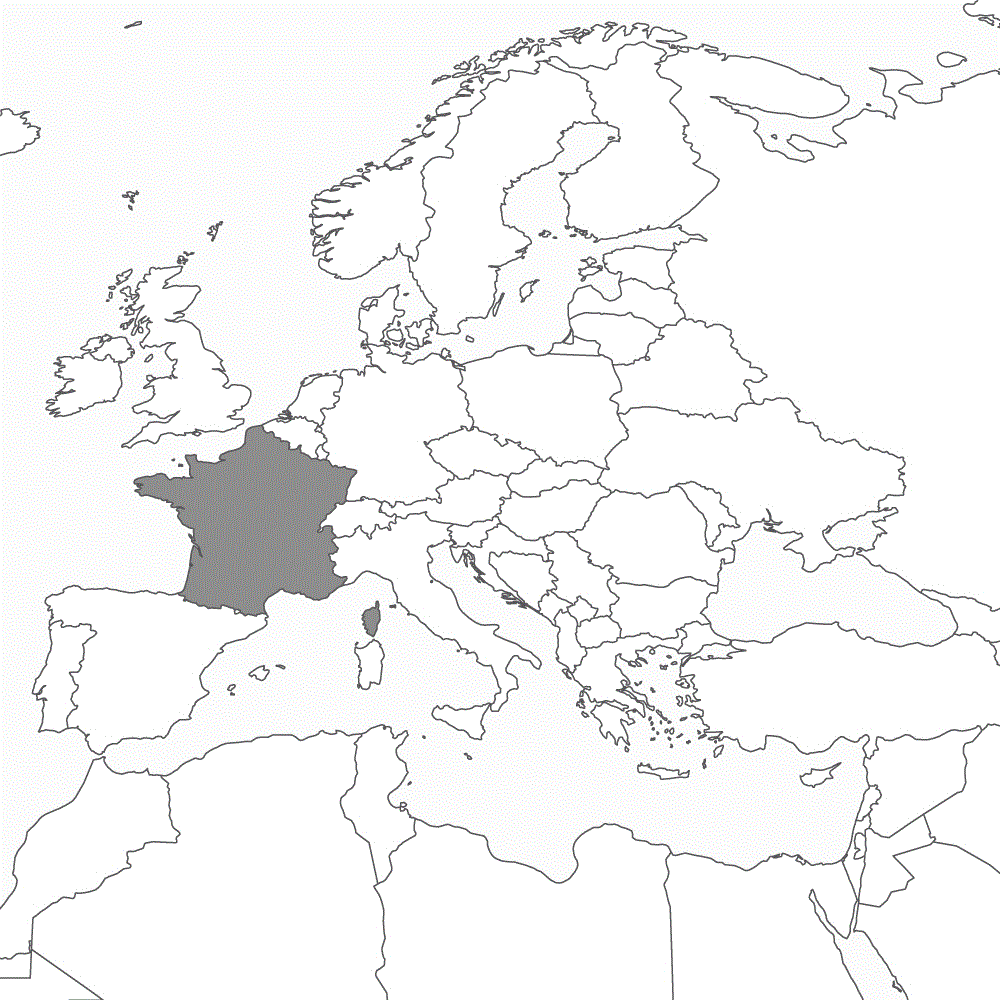
Alongside the discussions on stationing additional US nuclear weapons in Europe, France is pressing ahead with its own nuclear warfare plans. The French initiative is based on a new concept called ‘dissuasion avancée’ (advanced deterrence), which President Emmanuel Macron made public in the spring. Speaking on 2 March, Macron explicitly announced that for Europe the new “age of nuclear weapons” was dawning.[6] Among other things, his concept provides for nuclear-capable Rafale fighter jets belonging to France’s nuclear forces to be redeployed, especially in crisis situations, for limited periods at bases in other European countries. In addition to increasing the French nuclear arsenal, the aim here is to create uncertainty for a potential enemy, which effectively only means Russia. The foe is supposed to be left guessing in the face of ambiguity as to whether France’s nuclear-capable fighter jets are being deployed with or without nuclear warheads. This is intended to “complicate our adversaries’ calculations”, Macron stated.[7] Ten European countries have now agreed to cooperate with France within this framework. Alongside the United Kingdom, which is in any case a nuclear power, they are Germany, Belgium, the Netherlands, Greece and Poland, as well as the four northern European states. Although Denmark, Finland, Sweden and Norway have traditionally been close to the US, relations have recently been soured by US threats to annex Greenland.
Operation Poker
This year, the Bundeswehr is not only taking part in NATO’s nuclear war exercise ‘Steadfast Noon’ but also, for the first time, in the French-led nuclear weapons exercise codenamed ‘Operation Poker’. The collaboration was announced in mid-July during a meeting between Macron and German Chancellor Friedrich Merz. On that occasion, two French Rafale jets capable of carrying nuclear weapons and two escorting German Eurofighters practised – in a symbolic act – a joint in-flight refuelling operation from a French MRTT Phénix tanker aircraft.[8] At the end of September, the French nuclear forces then staged their latest nuclear war exercise, ‘Operation Poker’. It is not yet clear whether German military personnel were involved from the outset, but there had been talk of sending observers, and possibly also contributing fighter jets. Regarding the design of the manoeuvre, Rafale jets crews had reportedly been given the mission of “breaking through enemy lines” in order to “fire their missiles at a precisely specified location and at a precisely specified time”.[9] One participant is quoted as describing the exercise like this: “You have to get through whatever the cost – and the losses will be heavy.”
‘German or European nuclear weapons’
Political scientist Joachim Krause recently opened a window on potential alternatives to both ‘nuclear sharing’ with US warheads and nuclear hosting under France’s ‘dissuasion avancée’ approach. Krause, who is the former head of the Institute for Security Policy at Kiel University (ISPK) and a long-standing member of the influential German Council on Foreign Relations (DGAP), was already calling for a stronger German nuclear posture back in January: “We urgently need to discuss the protection of Germany through our own or European nuclear weapons”.[10] At the end of August, he argued that not only was the US under President Donald Trump “unreliable” but also that Berlin should “not set its expectations too high” with regard to ‘dissuasion avancée’. “An element of security” would be gained if “Germany had the atomic bomb”, Krause was quoted as saying. The problem, he notes, is that a German nuclear weapons programme is at present “completely unrealistic” due to Germany’s phase-out of civil nuclear power and the timidity of the country’s government.[11] However, he said “other options are being discussed” in policy circles. “I occasionally hear that the Scandinavian countries, together with the Baltic states and Germany and Poland, could launch a European nuclear weapons programme.” Krause admits that “the expertise” is currently lacking. But that is not a long-term obstacle. It can be remedied.
More on this topic: The new era of nuclear weapons, Im Zeitalter der Atomwaffen (II) and Im Zeitalter der Atomwaffen (III).
[1] Ana Maria Eftene: Romania will participate with three F-16 aircraft in the NATO Steadfast Noon 2026 exercise, organized in Italy. informat.ro 09.10.2026.
[2] Jacob Wollheim: Sweden and Finland to participate in NATO nuclear deterrence exercise. nordicdefencesector.com 11.10.2026.
[3] Milena Wälde: Finland tears up nuclear weapons ban in NATO shift. politico.eu 17.06.2026.
[4] Modesta Gaučaitė-Znutienė: Lithuania moves to lift constitutional ban on nuclear weapons: What it means. lrt.lt 09.10.2026.
[5] Polish president’s office criticises government for rejecting hosting of allied nuclear weapons. notesfrompoland.com 28.08.2026.
[6] Discours du Président sur la dissuasion nucléaire. uk.diplomatie.gouv.fr 04.03.2026.
[7] See: The new era of nuclear weapons.
[8] Starkes Duo für Europa: Deutsch-Französischer Verteidigungs- und Sicherheitsrat. bmvg.de 17.07.2026.
[9] Gaëtane Morin: « On est l’assurance vie de la nation » : dans les coulisses de l’opération Poker, qui simule un raid nucléaire. leparisien.fr 29.09.2026.
[10] Martin Debes, Nico Fried, Miriam Hollstein, Veit Medick, Viktar Vasileuski: Wie der Weg zu einer deutschen Atombombe aussehen könnte. stern.de 29.01.2026. See: The road to the bomb (II).
[11] Marc von Lüpke: „Russland hat sich in eine Kriegshysterie hineingesteigert“. t-online.de 26.08.2026.