Attack in space
Russian satellite stalks Iceye reconnaissance orbital supplying Ukraine with battlefield data. Partnering with Rheinmetall, Iceye uses a US-independent technology.
BERLIN/ESPOO/KYIV (our own report) – For the first time, a commercial satellite with direct links to Germany is at risk of becoming embroiled in an armed conflict in space. The satellite in question, ICEYE-X36, is a synthetic aperture radar (SAR) satellite operated by Iceye, a Finnish start-up. It supplies data to clients, including battlefield intelligence to the Ukrainian armed forces. The company, which partners in joint ventures with Rheinmetall, Germany’s huge defence conglomerate, has been supplying Ukraine with satellite-derived reconnaissance data for several years. Reports indicate that Ukrainian armed forces have been able to destroy thousands of Russian military vehicles with the help of this data. Last week, a Russian satellite came within a few kilometres of ICEYE-X36. Experts speculate that the Russian satellite could damage or even destroy it at any moment it. Moscow has already issued several warnings that it will not for long tolerate the direct involvement in the war of Western satellites, including private commercial platforms. In Europe, Iceye is regarded as a particularly promising start-up. Not having to rely on US technology, it is a global leader in its special field. Iceye has agreed a joint venture with Rheinmetall to make reconnaissance satellites for the Bundeswehr. While collaboration on production has just begun, Iceye is already supplying reconnaissance data to the Germany army’s Lithuanian Brigade.
US-independent technology
The Finnish start-up Iceye was founded in 2014 to manufacture satellites capable of monitoring changes in Arctic ice. This is where the company’s name comes from. Iceye satellites are relatively small. They weigh only around 100 kilograms. They use synthetic aperture radar (SAR) technology, which works by means of microwaves that can provide sufficient data for high-resolution images, even at night, in bad weather or in the presence of smoke and other obstacles to visibility. Iceye is already regarded as a world leader in this sector. The company began working for military clients a few years ago and has been thriving ever since. It not only sells satellites but also data gathered from its own satellite constellation – a group of coordinated satellites claimed to be “the largest and most advanced” of its kind worldwide.[1] Iceye has increased its workforce by around 400 this year to more than 1,000 employees, and intends to keep expanding. Sales, which stood at around 250 million euros in 2025, making a profit of more than 100 million euros, are set to reach 500 million euros this year and projects at 1.2 billion euros next year. With all this success, Iceye is regarded as a European flagship military start-up. Its core expertise is European and independent of US technology controls, although it does have a US subsidiary and regularly uses US launch providers.
Intelligence and military reconnaissance
By collecting data from its own monitoring operations and selling that data to government bodies of all kinds, Iceye has ventured into highly sensitive areas that were once the reserve of police, intelligence and military reconnaissance operations. It was reported, for example, that the data supplied by Iceye helped to “identify ships responsible for cable damage in the Baltic Sea”.[2] Finland is said to be using images produced by Iceye to monitor Russian troops and their movements. More recently, Iceye has apparently produced a report “on security developments in the Baltic Sea region”, which documents the activities of the Russian armed forces in and around Kaliningrad, including the construction of facilities that would offer Russia a wide range of options for monitoring “the entire region,” ranging from “intercepting satellite communications to detecting air traffic and ballistic missiles”.[3] Iceye has not only documented exactly how the launchers for a S-400 air defence system in the Kaliningrad exclave were raised, indicating when it is “operation-ready”; but also shown how Russian merchant ships, escorted by warships, delivered military equipment to Tartus in Syria and to Tobruk in Libya. For its analyses, Iceye also draws on data from third parties, such as ship-spotting sources.
Reconnaissance for the Lithuanian Brigade
Earlier this month, Iceye began producing SAR satellites for Germany’s Bundeswehr at its factory in Neuss under a joint venture agreement with Rheinmetall. The German arms group holds a 60 per cent stake, while the Finnish company holds 40 per cent. Several dozen are to be manufactured there each year. The aim is to establish a comprehensive orbital reconnaissance system called Spock 1. It is expected to be fully operational as early as next year.[4] The costs are estimated at 1.7 billion euros.[5] Also this month, the joint venture between Rheinmetall and Iceye began supplying the Bundeswehr with SAR satellite data gathered, according to Rheinmetall, from “other satellites”. This presumably refers to Iceye’s own orbital constellation.[6] The data is initially being used above all to supply the 45th Armoured Brigade ‘Lithuania’ with reconnaissance intelligence. But the plans being drawn up by Rheinmetall and Iceye go far beyond this. The consortium is also bidding for a contract to build Spock 2, a constellation of up to 1,200 satellites that combines a range of different sensors, including radar and electro-optical, that can optimise the situational awareness available to the Bundeswehr during operations.[7]
Battlefield data for Ukraine
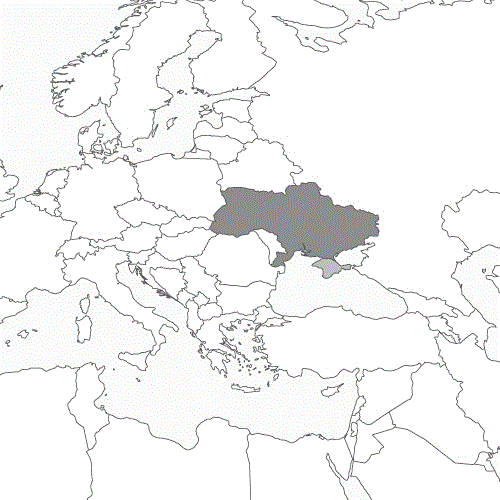
Iceye has also been supplying data to the Ukrainian armed forces for more than four years. The company announced on 18 August 2022 that it had signed an agreement to this effect with the ‘Serhiy Prytula Charity Foundation’,[8] a Ukrainian organisation that has been organising private support for the Ukrainian army since 2020. The arrangement gives Kyiv access “at a high repetition rate” to satellite imagery of “critical locations”. The satellites themselves continue to be operated by the Iceye. This makes Iceye a de facto party to the war. Indeed, the same goes for Rheinmetall, and has done since 2024. The German arms group announced in June 2024 that it was investing in Iceye, with the aim of making satellite data even more “useful on the tactical battlefield”.[9] In October 2024, it was confirmed that Kyiv would henceforth have access to Iceye’s satellite data as part of the newly initiated partnership between Iceye and Rheinmetall. And this joint venture is, of course, supported by the German government.[10] The SAR satellite data reportedly forms “the basis for decision-making and operational planning by the Ukrainian armed forces”. According to Ukrainian military intelligence, this reconnaissance has now contributed to the destruction of thousands of Russian targets.[11]
Satellite hunt
One of the Iceye satellites supplying Ukraine with battlefield data could currently be the target of a Russian attack. Moscow has repeatedly emphasised that it takes the de facto military interference by the Iceye satellites very seriously and reserves the right to respond accordingly. Reports dating back to May indicate that the Russian military has manoeuvred four of their satellites – Cosmos 2610 to 2613 – very close to the ICEYE-X36. When the Iceye satellite swerved to avoid them, the Russian satellites followed it. The commander of the Bundeswehr’s Space Command, Major General Michael Traut, has been quoted as saying that this amounted a veritable “hunt”.[12] The stalking manoeuvre has reportedly been seen again in late September and then repeatedly over the past week. In the last few days, Russia’s Cosmos 2612 is said to have approached ICEYE-X36 to within five kilometres or even less. Moscow now has several options, depending on the equipment configuration of Cosmos 2612. It could use the stalking approach as a threat for leverage. Alternatively, Cosmos 2612 could render the Iceye signals useless by deploying a jammer. It is also conceivable that a laser could be deployed to inflict permanent damage on ICEYE-X36 or its sensors. If Cosmos 2612 is equipped with the necessary technology, even shooting down the satellite cannot be ruled out. This would be the first overt act of war in space, instigated by the deployment of civilian Western satellites for the Ukraine war.[13]
[1] The world leader in sovereign intelligence from space. iceye.com.
[2] Julian Staib: Spionage aus privater Hand. Frankfurter Allgemeine Sonntagszeitung 24.05.2026.
[3] Julian Staib: Wie Russland im Ostseeraum aufrüstet. Frankfurter Allgemeine Zeitung 19.10.2026.
[4] Rheinmetall ICEYE Space Solutions stellt Bundeswehr mit SPOCK 1 Zugriff auf SAR-Satelliten bereit. hartpunkt.de 06.10.2026.
[5] See: Das deutsche Starlink.
[6] Major milestone achieved: Rheinmetall ICEYE Space Solutions provides the German Armed Forces with exclusive access to SAR satellites. rheinmetall.com 06.10.2026.
[7] Martin Rosenkranz: Deutsche Bundeswehr auf dem Weg zur Weltraummacht. militaeraktuell.at 21.08.2026.
[8] The contract signed with the Serhiy Prytula Charity Foundation will initially provide the Government of Ukraine with the full capabilities for one of ICEYE’s satellites already in orbit. iceye.com 18.08.2022.
[9] Rheinmetall vertieft Zusammenarbeit mit Satellitenhersteller ICEYE. hartpunkt.de 12.09.2024.
[10] Rheinmetall und ICEYE unterstützen Ukraine mit Satellitenbildern. hartpunkt.de 11.11.2024.
[11] Andreas Donath: Russischer Militärsatellit bedrängt Iceye-X36. golem.de 18.10.2026.
[12] Cassell Bryan-Low, John Irish: Russian satellite activity raises concerns for Starlink, German space commander says. reuters.com 09.10.2026.
[13] Andreas Donath: Russischer Militärsatellit bedrängt Iceye-X36. golem.de 18.10.2026.