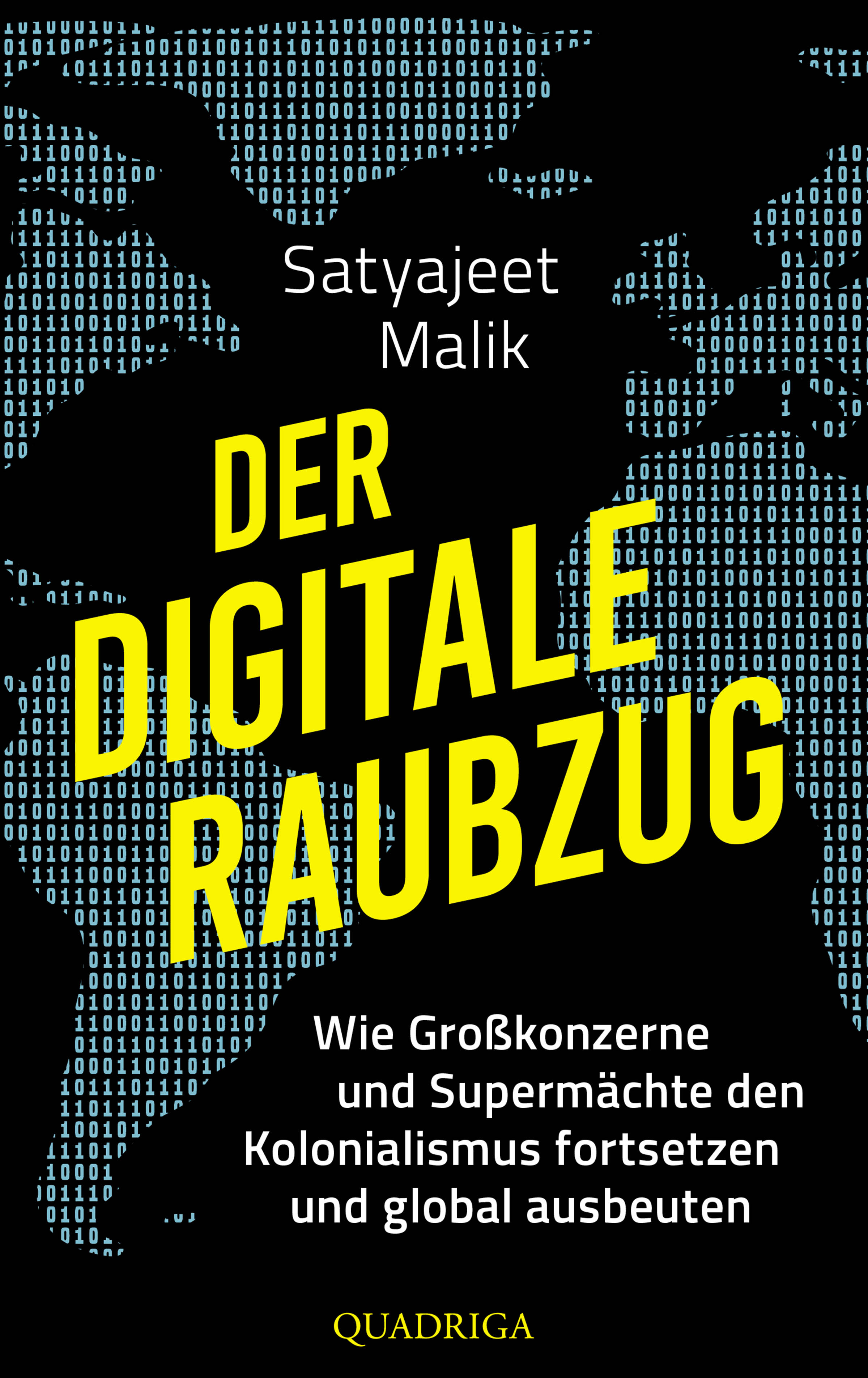
Rezension: Der digitale Raubzug
Satyajeet Malik beleuchtet die Aktivitäten der großen Digitalkonzerne im ärmeren Teil der Welt, wo sie große Teile der Bevölkerung in Abhängigkeit und Verschuldung treiben – zum Teil mit Hilfe deutscher Finanziers.
Die gewaltige Macht, die große Digitalkonzerne besitzen, ist berüchtigt – und dies weltweit. Womöglich aber ist sie nirgends so gewaltig wie im ärmeren Teil der Welt, in den früheren Kolonien europäischer Staaten. Wie groß sie ist und welche Folgen das hat, das schildert der Journalist Satyajeet Malik in seinem soeben veröffentlichten Buch „Der digitale Raubzug“ am Beispiel der Aktivitäten von Meta in Indien. Rechnet man die Nutzer von Facebook, Instagram und WhatsApp zusammen – sie alle zählen zu Meta –, dann kommt man in Indien auf rund 1,27 Milliarden. Meta arbeitet in Indien eng mit Reliance Industries, dem größten Privatunternehmen des Landes, zusammen, was ihm exzellente Zugänge zur Macht und zum Markt verschafft. Über WhatsApp vergibt Meta Kleinkredite, nicht zuletzt auch an Bauern. Reliance steuert mit Hilfe von Apps die Aktivitäten von Landwirten und organisiert die Abnahme der Ernten. Beides ergänzt sich, zum beiderseitigen Profit. Den Schaden haben die Kleinbauern, die von Reliance abhängig werden und sich bei Meta gefährlich verschulden. Am Ende der Entwicklung stehen für sie Abhängigkeit, Ausplünderung, Armut. Große westliche Konzerne wie Meta, zuweilen auch deutsche Finanziers wie die Entwicklungsbank KfW, tragen maßgeblich dazu bei.
Der digitale Kolonialismus, mit dem sich Malik in seinem Buch befasst, wird von Soziologen wie Michael Kwet als „Nutzung digitaler Technologie zur politischen, wirtschaftlichen und sozialen Kontrolle eines fremden Territoriums oder einer fremden Nation“ definiert. Beispiele gibt es zuhauf. Die großen Digitalkonzerne, so beschreibt es Malik, tragen nicht nur dazu bei, Teile der Bevölkerung in ärmeren Staaten – so etwa Kleinbauern – mit Kleinkrediten in die Verschuldung zu treiben. Sie verdienen – nicht zuletzt auch in Ländern wie Indien – Geld mit den Daten ihrer Nutzer, ohne ihnen dafür etwas zu bezahlen. Steuern? Um diese drücken sie sich herum. Das Öffentlichkeitsmonopol, das Plattformen wie Facebook, X oder Instagram erobert haben, gestattet es ihnen, starke „Kontrolle über den politischen und sozialen Bereich der unterentwickelten Länder auszuüben“. Dazu zählen „in einigen Fällen“, hält Malik fest, „sogar die Kontrolle des gesamten Informationsflusses im Netz, einschließlich Massenüberwachung“. Und es kommt – Stichwort: die Kooperation von Meta mit Reliance in Indien – unter Umständen noch die Kontrolle über die gesamte Lebensmittelversorgungskette hinzu.
Dabei rät Malik dazu, den Begriff Kolonialismus nicht oberflächlich zu verwenden, ihn nicht lediglich auf eine Kombination aus Rassismus und individueller Ausbeutung zu reduzieren. Kolonialismus, das ruft er unter Bezug auf herausragende antikoloniale Theoretiker wie Walter Rodney oder Kwame Nkrumah in Erinnerung, war immer ein subtiles ökonomisches Verhältnis. In Indien etwa war es vor allem durch zwei Mechanismen geprägt: zum einen die „Eroberung und Zerstörung des indischen Binnenmarktes“, um dort einen Absatzmarkt „für britische Industrieprodukte zu schaffen“; zum anderen die „Aneignung von Überschüssen, insbesondere der landwirtschaftlichen“, wobei indische Bauern gezwungen wurden, sich mit ihrem Anbau am Bedarf der britischen Kolonialmacht auszurichten, also den Bedarf der eigenen Bevölkerung zu ignorieren. Dass es seit dem Beginn der Kolonialherrschaft häufiger zu Hungersnöten in Indien kam als zuvor, das hatte also System. Ihnen fielen insgesamt bis zu 100 Millionen Menschen zum Opfer – nicht als Opfer der Willkür einzelner Despoten, sondern als Opfer eines infamen ökonomischen Systems.
Malik liefert einen tiefen historischen Überblick über die Ursprünge und die Entwicklung des Kolonialismus nicht nur in Indien, sondern auch in Kenia – einer Siedlerkolonie, die sich strukturell von Indien unterscheidet, wo nicht der Zuzug britischer Siedler, sondern die Beherrschung der einheimischen Bevölkerung im Vordergrund stand. Malik schildert, wie der Kolonialismus, nachdem er die Kolonien ökonomisch ruiniert hatte, in den Neokolonialismus überging, der die – nun ehemaligen – Kolonien weiterhin unter der Knute des Westens hielt. Heute, stellt Malik fest, werden „bestehende koloniale Abhängigkeitsverhältnisse, die sich über Jahrhunderte herausgebildet haben“, inmitten einer tiefen Krise des Kapitalismus in den westlichen Staaten „erneut strategisch genutzt“ – und dabei kommen vermehrt auch digitale Plattformen, Digitalkonzerne zum Einsatz. Bauern in Indien verarmen nicht mehr, weil ihnen ein britischer Kolonialbeamter im Nacken sitzt, sondern weil sie digital in die Abhängigkeit, in die Verschuldung getrieben werden. Die Profite, die Überschüsse fließen heute wie damals, freilich nach Abzug eines Anteils für die einheimische Bourgeoisie – siehe Reliance –, in den Westen. „Der Kapitalismus“, resümiert Malik, „hat in allen historischen Phasen die jeweils fortschrittlichsten Technologien genutzt, um seine Gesamtinteressen durchzusetzen“. Zur Zeit sind das eben die digitalen Technologien.
Satyajeet Malik: Der digitale Raubzug. Wie Großkonzerne und Supermächte den Kolonialismus fortsetzen und global ausbeuten. Quadriga Verlag. Köln, 2026. 288 Seiten. 25,00 Euro.